
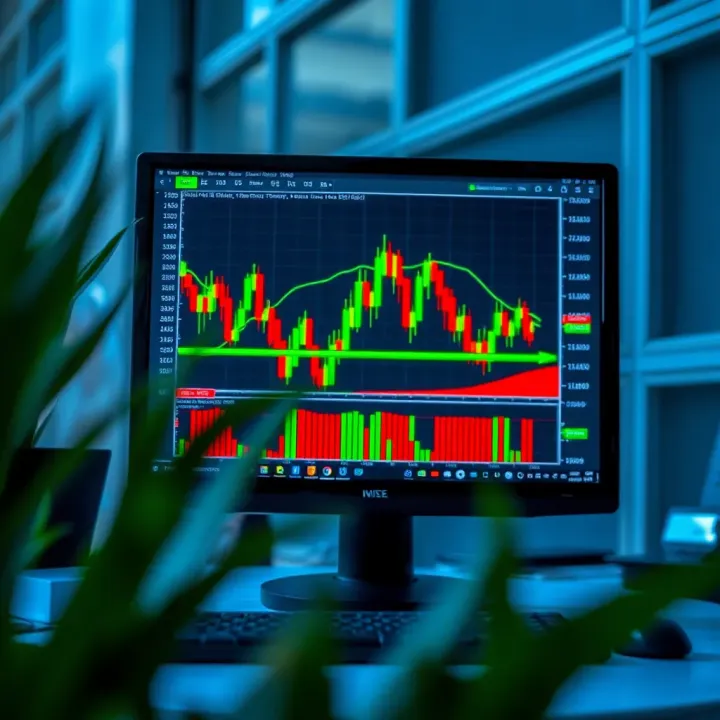
Using Forex Trading Videos to Learn Successfully
📈 Master forex trading with video tutorials! Explore key concepts, types of content, and tips tailored for South African traders to boost your skills effectively.
Edited By
Isabella Reed
Trading forex, or foreign exchange, involves buying and selling currencies with the goal of making a profit from changes in exchange rates. The forex market operates 24 hours a day, five days a week, making it one of the most accessible and liquid financial markets worldwide. For South African traders, this offers flexibility but also requires discipline to navigate its unique challenges.
Unlike the JSE where shares are traded during fixed hours, forex markets work through a network of banks and brokers globally, so you can trade anytime from your home in Johannesburg or Cape Town. However, local factors like Eskom loadshedding, internet stability, and regulatory compliance under the Financial Sector Conduct Authority (FSCA) can affect your trading experience.

The forex market primarily involves currency pairs, for example, the USD/ZAR pair which shows how many South African Rands one US Dollar can buy. Price fluctuations in these pairs create opportunities but also risks. Unlike stocks, forex trading often involves leverage, allowing you to control larger positions with smaller capital. This makes risk management critical.
Selecting the right broker is a key step. Look for FSCA-regulated brokers that offer transparent pricing, reliable platforms, and efficient customer support. Many brokers now provide demo accounts where you can practise with virtual money before trading live. Features to consider include low spreads, fast execution speeds, and accessible platforms like MetaTrader 4 or 5.
Success in forex trading starts with developing sound habits:
Set clear goals and realistic expectations.
Keep a trading journal to review your trades.
Use stop-loss orders to limit potential losses.
Avoid chasing markets; patience is vital.
Discipline in following your trading plan often makes the difference between staying in the game or blowing your account.
Getting started may seem daunting but taking it step-by-step, learning the market structure, and practising with demo accounts can build your confidence. Remember, trading is not a sprint – steady progress beats quick wins.
This article will guide you through practical steps, from grasping market basics to selecting a broker and managing risks effectively, all tailored for South African traders eager to understand and succeed in forex trading.
Grasping the basics of forex trading lays the groundwork for anyone keen to navigate the currency markets confidently. It’s not just about buying or selling currencies; it’s about understanding how these trades fit into the broader financial ecosystem. For South African traders stepping into this world, a solid foundation helps avoid costly mistakes and spot realistic opportunities.
Forex trading involves exchanging one currency for another, like swapping rands for US dollars. This global market operates 24/5 and is the largest financial market by daily turnover, moving over $6 trillion on average. It's essential to realise that forex trading is not just for banks or big hedge funds; individual traders and investors can participate with relatively small amounts.
Practical relevance kicks in when you consider travel, international business, or even investing abroad. For example, knowing how currency fluctuations affect the rand can influence when you book flights or plan imports.
The forex market centres around major currencies such as the US dollar (USD), euro (EUR), Japanese yen (JPY), British pound (GBP), and the South African rand (ZAR). These currencies are traded in pairs — think EUR/USD or USD/ZAR — where one currency's value is relative to the other.
Traders keep a sharp eye on pairs involving the rand because South Africa’s economic and political events can cause these pairs to sway significantly. For instance, during periods of uncertainty around Eskom’s loadshedding, the USD/ZAR pair might see spikes due to shifting investor confidence.
Unlike stock markets that close at fixed times, the forex market operates continuously from Sunday evening to Friday evening SAST. This means you can react to news or events anytime during these days. Moreover, forex trading is largely driven by macroeconomic factors rather than company earnings reports, so understanding broader economic stuff is crucial.
Trading leverage also makes forex different — you can control large positions with relatively small capital, which can amplify gains but also losses.
The forex market divides roughly into four main sessions based on global financial centres: Sydney, Tokyo, London, and New York. Each overlaps at certain times, increasing trading volume and liquidity. For South African traders, the London session overlaps conveniently, often providing the most movement in USD/ZAR and EUR/ZAR pairs.
Being aware of these sessions helps manage when to trade; for example, volatility tends to spike during session overlaps, offering more opportunities but also requiring tighter risk control.
Major banks and financial institutions are the primary market makers, providing liquidity by continuously quoting prices. Brokers connect retail traders like yourself to this vast network. Understanding this relationship matters because the broker you pick influences trading costs, execution speed, and available tools.
Traders range from high-frequency algos to retail folks trying to profit from short-term moves. Recognising these players helps explain sudden price shifts or seemingly erratic market behaviour.
World events vastly influence forex markets. Decisions by the US Federal Reserve on interest rates, political shifts in Europe, or commodity price changes can rattle currency pairs, including the rand.
For instance, a surprise increase in South Africa’s repo rate by the South African Reserve Bank (SARB) can strengthen the rand as investors chase higher yields, impacting forex positions. Keeping tabs on credible news sources and economic calendars is near essential for timely reactions and protecting your positions.
Forex trading hinges on understanding currencies and market dynamics. Keeping an eye on sessions, participants, and global events is how you stay on top rather than chasing after the market.
This foundation prepares you not only to trade but to appreciate the why behind every price move, setting you up for smarter, more informed decisions.
Jumping into forex trading without proper steps is like setting off on a safari without a map—unpredictable and risky. This section tackles the basics and practical steps to get your trading journey off on the right foot. Starting correctly means picking a reliable forex broker and setting up your trading account smartly; these steps lay the groundwork for everything else.
Regulation ensures a broker operates under strict rules to protect traders. In South Africa, the Financial Sector Conduct Authority (FSCA) oversees authorised brokers. Selecting an FSCA-licensed broker means your funds are safer and the broker must comply with local laws, reducing the chances of fraud or malpractice. For example, FNB Securities operates under strong regulation, giving traders peace of mind.
Keep in mind that some international brokers may not be FSCA-regulated, raising risk. Always double-check a broker's regulatory status on FSCA’s official register before opening an account.
Not all forex brokers are the same. The spread is the cost difference between the buying and selling price of a currency pair. Brokers offering tight spreads, like 1 pip on EUR/USD, reduce trading costs, which matters for frequent trading. Some brokers charge commissions per trade, while others rely solely on spreads. Understanding these fees is crucial since costs eat into profits.
Trading platforms vary too. MetaTrader 4 (MT4) and MetaTrader 5 (MT5) remain popular because they offer robust charting, technical indicators, and automated trading options. Choose a broker with a platform that suits your style, whether you prefer desktop or mobile trading.
Good customer support can save your skin when facing technical or account issues. Look for brokers offering 24/7 support via multiple channels—phone, email, and live chat. If your broker is abroad with slow response times, it can disrupt your trading, especially during volatile market hours.
South African brokers typically offer local-language support and may better understand regional nuances like Eskom loadshedding affecting internet reliability, so consider this when choosing.
Forex brokers provide various account types tailored for different trader needs. Standard accounts usually require higher minimum deposits and offer full access to spreads and leverage. Mini or micro accounts allow trading with smaller amounts—sometimes as low as R100—ideal for beginners testing the waters.
Some brokers offer Islamic (swap-free) accounts complying with Sharia law, removing overnight interest charges. Knowing these differences helps you pick an account fitting your budget and trading strategy.
Deposit methods vary widely, but safety and convenience should come first. Local deposit options like EFT (electronic funds transfer) and payments through South African platforms such as PayLater or Zapper are common and usually fast.
Avoid sending money to brokers through untraceable or non-secure methods. Always confirm your broker’s deposit and withdrawal policies before committing to avoid surprises or delays.
Leverage lets you control a larger trade size with a smaller amount of capital, but it’s a double-edged sword. For instance, a 1:100 leverage means you can trade R100,000 with just R1,000 in your account. While it can magnify profits, losses get amplified too.
Margin is the money you need to open and maintain a leveraged position. Ensure you grasp margin calls and the risks of over-leveraging. South African traders tend to play it safer with moderate leverage, like 1:20 or 1:30, to avoid wiping out accounts too quickly.
Starting smart with the right broker and account setup isn’t optional—it’s the stepping stone to sustainable forex success. Give it the attention it deserves before pressing 'trade'.
Understanding both fundamental and technical analysis is key for anyone serious about trading forex. These methods offer different perspectives: fundamental analysis looks at the economic and political forces shaping currency values, while technical analysis studies price movements and patterns. Together, they provide a more complete picture, helping traders make informed decisions rather than relying on guesswork.
Economic indicators like interest rates, inflation, and GDP have a direct impact on currency values. For example, when the South African Reserve Bank (SARB) raises interest rates, the Rand (ZAR) often strengthens since higher rates attract foreign investment seeking better returns. Conversely, rising inflation can erode purchasing power, causing a currency to fall. A trader tracking these numbers can anticipate shifts in the forex market and position themselves accordingly.
Political stability also plays a big role. Unpredictable events, such as elections or diplomatic tensions, often rattle markets. When there’s political uncertainty—say, during municipal elections or debates over policy changes—investors sometimes pull back, causing the local currency to weaken. Monitoring developments in Gauteng or KwaZulu-Natal, for example, can alert traders to risks and opportunities.
Getting reliable news and data is essential for fundamental analysis. Trusted sources include the South African Reserve Bank releases, Statistics South Africa’s reports, and major financial news outlets like Moneyweb and BusinessTech. Global platforms like Bloomberg and Reuters also provide timely updates. Keeping an eye on the economic calendar helps traders spot key data releases that could swing the market.
Charts are the bread and butter of technical analysis. The three most popular types are line, bar, and candlestick charts, with the latter preferred by many for its clear visual display of open, high, low, and close prices over chosen timeframes—from minutes to weeks. For instance, a swing trader might focus on daily charts, while a scalper looks at 5-minute charts.
Indicators like moving averages, Relative Strength Index (RSI), and Moving Average Convergence Divergence (MACD) add another layer by smoothing out price data and signalling momentum or possible reversals. A simple example: when the 50-day moving average crosses above the 200-day one, traders call it a "golden cross," often seen as a bullish sign.
Reading price action and chart patterns is about spotting behaviours raw price data reveal without relying heavily on indicators. Patterns such as head and shoulders, flags, or double tops can hint at upcoming movements. For instance, if the Rand shows a double bottom pattern against the US dollar after a drop, this might suggest a reversal to the upside soon.
Combining fundamental and technical analysis doesn't guarantee success, but it equips traders with sharper tools to navigate the dynamic forex market confidently and systematically.
Getting a handle on practical trading skills is where theory meets real money. It's about turning your understanding of forex fundamentals into a consistent, measured approach that safeguards your capital while chasing profit. These skills give you control—your own rules to follow so you don't get carried away by the hype or emotions swamping the market.
Setting realistic goals and risk limits comes first. If you expect to double your account overnight, you’re headed for a rude shock. Better to aim for steady gains like 5–10% a month and stick to risk limits of no more than 1–2% of your capital on any one trade. This approach keeps your account afloat during losing streaks while giving you room to grow over time. For instance, if your total capital is R10,000, risking R100–R200 per trade balances opportunity and caution.
Defining entry and exit rules means having clear criteria for when to open and close trades. Maybe you enter when a currency pair breaks above a moving average and RSI shows it’s not overbought. Your exit might be a fixed target of 50 pips profit or a stop loss just below a recent low. Without these rules, emotions often run the show, leading to premature exits or staying in losing trades for too long. Sticking to your rules keeps trading objective and repeatable.
Importance of discipline and consistency can’t be overstated. A well-crafted plan means nothing if you hop in and out on a whim. Discipline is about following your strategy even when markets get choppy or your gut says otherwise. Consistency builds a track record and confidence over time. Remember, the market won’t always give you easy wins, but regular, disciplined trades stack up in the long haul.
Using stop-loss and take-profit orders is your frontline defence. These orders automatically close your trades at preset levels, limiting losses or locking in profits. For example, placing a stop loss 30 pips below your entry prevents a small setback from ballooning into a big problem. Similarly, a take-profit order ensures you cash out once your target is hit without second-guessing. These tools guard your account when you’re not glued to your screen.
Position sizing strategies help you control risk relative to your account size. If your risk limit is 2% and you have R20,000, don’t put all R20,000 on the line at once. Instead, calculate how many lots or units fit within that risk window. For smaller accounts, adjusting position sizes protects you from big losses and promotes steady growth. For example, trading smaller lots allows you to experiment while managing the downside.
Dealing with emotions and avoiding overtrading is tougher than it sounds. Fear, greed, and boredom can push you into rash decisions or chasing losses. Overtrading—taking too many trades to recover losses or boost profits—often burns through capital quickly. Getting your mind right means recognising emotional triggers and sticking to your strategy. Take breaks when needed and never trade just for the sake of it.
Benefits of simulated trading are huge, especially when starting out. Demo accounts let you trade with virtual money in real market conditions. This helps you familiarise yourself with the trading platform and test strategies without risking a cent. You can nail down order placement, timing, and risk management before you go live.
Transitioning from demo to live trading requires a mindset shift. Real money adds pressure that virtual cash can't replicate. Start small when you move to a live account and accept that losses are part of the game. Many traders blow accounts by pushing too hard too soon after demo success. Gradual scaling builds confidence and patience.
Common pitfalls to watch for include ignoring trade journal records, overtrading demo accounts, or mistaking demo comfort for live readiness. Don't fall into the trap of jumping into live trades without enough practice, or changing strategies too often. Also, remember that slippage and emotions on live accounts differ from demos. Approach the transition with care and stay grounded.
Practical skills are what separates successful traders from hopeful ones. These building blocks — planning, risk control, and deliberate practice — set the foundation to trade forex with confidence and discipline.
Trading forex involves more than just buying and selling currency pairs. The right tools and resources make a noticeable difference in how effectively you can analyse the market and manage trades. South African traders, in particular, benefit from platforms and materials tailored to local market conditions and regulation. This section highlights key trading software, educational options, and community support crucial for sharpening your skills and making informed decisions.
The backbone of any forex trading effort is the platform you choose. MetaTrader 4 (MT4) and MetaTrader 5 (MT5) remain the most popular worldwide due to their user-friendly interface and comprehensive tools. MT4, for instance, is praised for its reliability and straightforward charting options, suitable for beginners. MT5 offers more indicators and supports algorithmic trading, attracting those leaning towards automation or deeper technical analysis.
Using these platforms can allow you to trade currency pairs like the USD/ZAR with ease, placing orders and tracking their progress in real-time. Many South African brokers support MT4 and MT5, letting you connect your account instantly and trade locally relevant pairs, such as the rand against the euro or dollar.
When evaluating trading platforms, look out for features like advanced charting tools, real-time alerts, and the ability to automate trades through Expert Advisors (EAs). Automated strategies can help you avoid emotional decisions and stick to predetermined rules. Alerts, meanwhile, can notify you when a currency hits a critical price level, so you don’t miss important opportunities, even when away from your screen.
Mobile trading is becoming essential. Platforms like MT4 and MT5 have apps that work smoothly on Android and iOS, allowing you to check prices, manage positions, and execute trades on the go. This flexibility suits South African traders dealing with busy schedules or those managing multiple ventures.
Forex education is critical for building confidence and avoiding costly mistakes. Online courses and tutorials tailored for South Africans can explain everything from basic terms like 'pip' or 'spread' to advanced strategies like Fibonacci retracements or candlestick patterns. Look for courses offering practical examples based on real market conditions, as this helps you relate theory to what happens on the live charts.
Engaging in webinars, forums, and local trading groups also adds value. Webinars often feature experts sharing recent market insights or demonstrating platform features. Forums like those on MyBroadband or specialised Facebook groups offer a space to ask questions, exchange strategies, and warn against scams or unreliable brokers.
Finally, staying up-to-date with market news is non-negotiable. Economic events such as SARB interest rate decisions, the rand’s reaction to global oil prices, or geopolitical shifts in the region can rapidly shift forex trends. Regularly review market analysis and news from trusted sources to adapt your strategy accordingly.
Using the right tools and tapping into educational resources isn’t just an extra step; it’s a vital part of navigating the forex market confidently, especially for South African traders dealing with the rand and global volatility.
Combining modern platforms, continuous learning, and community involvement prepares you well for the challenges and opportunities forex trading brings.
📈 Master forex trading with video tutorials! Explore key concepts, types of content, and tips tailored for South African traders to boost your skills effectively.
📈 Discover the best places in South Africa to learn forex trading, from top online platforms to brokers and courses. Start trading with confidence today!

Learn forex trading for free with this clear guide for South Africans 🌍📈 Get to grips with key terms, reliable platforms, and avoid common beginner mistakes.
📈 Discover where South Africans can learn forex trading effectively! Explore courses, mentorships, and tools to sharpen your skills and trade smart.
Based on 15 reviews