
Binary Trading vs Forex Trading: Key Differences
📈 Explore the main differences between binary and forex trading, plus key tips for South African traders on regulation, risks, and effective trading strategies.
Edited By
Isabella Reed
Forex trading has become a popular way for many South Africans to participate in global financial markets. However, choosing the right forex trading system can be the difference between steady profits and unnecessary losses. A forex trading system is essentially a set of rules or strategies designed to help traders identify entry and exit points in the currency markets. These systems vary widely—from manual chart analysis to fully automated algorithms.
For South African traders, understanding which forex systems suit local market conditions and personal trading styles is vital. Factors like the volatile ZAR exchange rate, access to reliable internet connections, and fluctuating data costs influence system choice.
Picking a forex system that aligns with your trading goals, risk tolerance, and available resources can help you trade more confidently and consistently.
Some key features to consider when evaluating forex trading systems include:
Clarity of rules: The system should have clear, straightforward entry and exit points.
Risk management: Incorporation of stop-loss mechanisms or position sizing to protect capital.
Backtesting capability: Ability to test strategies using historical data to gauge effectiveness.
Adaptability: Flexibility to adjust strategies as market conditions evolve.
South African traders often rely on popular platforms like MetaTrader 4 or 5, which support various trading systems and offer access to local brokers regulated by the Financial Sector Conduct Authority (FSCA). Beginners may start with trend-following systems that use moving averages, while experienced traders might explore scalping or grid systems.
This guide will break down the types of forex trading systems, their strengths and weaknesses, and practical advice on choosing and testing a system that fits your trading profile. It will also touch on risk management strategies and highlight tools available locally to enhance your trading results. With the right system, disciplined approach, and understanding of South African market realities, you can increase your chances of consistent forex success.
Grasping the ins and outs of forex trading systems is a must for anyone serious about trading in South Africa. These systems serve as roadmaps that guide your trades, offering structure in a market that can feel chaotic. When you understand what makes a system tick, you gain the power to pick a strategy suited to your style, risk appetite, and local market quirks.
A forex trading system typically combines a set of rules that tell you when to enter or exit trades based on analysis methods. This includes technical indicators, chart patterns, and sometimes fundamental data. For example, a simple system might use moving averages to spot trends and RSI (Relative Strength Index) to assess overbought or oversold conditions. Alongside these signals are risk rules like stop-loss and take-profit limits, which safeguard your capital.
Having clear components is practical because it removes guesswork. Traders can follow systematic steps instead of chasing their tails, which is especially helpful amid South Africa’s volatile rand exchange rates.
Every system has a clear aim, whether it’s to capture short-term price swings or hold positions for the long haul. Knowing the purpose shapes how you use the system day to day. For instance, if your goal is steady income, a trend-following system that filters out minor fluctuations might suit you. In contrast, if you're after quick wins, a scalping system that capitalises on minute price changes during the Johannesburg Stock Exchange's market hours would fit.
Setting realistic goals keeps expectations in check and helps avoid emotional decision-making — a common pitfall for many traders.
Some systems are fully automated through software like MetaTrader, executing trades on your behalf based on set criteria. Others require manual signals interpretation and order placement. Automation can be a blessing for South African traders who juggle multiple commitments, ensuring trades aren't missed during local market hours. However, manual trading offers flexibility to factor in unexpected news events or local factors like loadshedding schedules.
Choosing between automation and manual methods depends on your comfort with technology, your trading availability, and how much control you want over the process.
A reliable system aims to deliver steady performance across different market conditions rather than flashy wins followed by hefty losses. For example, if a system showed a string of profits during the rand’s quiet periods but faltered wildly during times of political uncertainty or global shocks, it would lack consistency.
Consistent returns mean you can plan finances better and keep trading without losing confidence.
A standout forex system includes hard rules for risk control, such as maximum drawdown limits and sensible position sizing. This shields your trading capital against sudden swings. Think of it as a bakkie with a robust suspension system built to handle South Africa’s uneven roads — without it, you’d have rough rides and potential breakdowns.
Good risk management means even when trades go south, you won’t be wiped out.
Markets don’t stay still. A system that adapts to new trends or shifting volatility levels works better over time. For instance, during times when the USD/ZAR pair is choppy due to economic data releases, an adaptable system might switch from a trend-following mode to range trading.
Flexibility helps prevent the system from becoming outdated or ineffective, especially in a market as fluid as forex.
A solid forex trading system is like a reliable mate — clear, consistent, risk-aware, and ready to handle whatever the market throws at it.
Understanding these elements builds the foundation for choosing and trusting a system that matches your trading ambitions and local realities.
Understanding the different types of forex trading systems helps South African traders pick the approach that suits their style, risk tolerance, and local market conditions. Each system works best under certain market behaviours and has unique advantages and downsides. Having a grasp on these types can improve decision-making and help avoid costly mistakes.
How trend-following works: Trend-following systems capitalise on the idea that currency prices often move in sustained directions for some time. Traders aim to buy when the trend is upwards and sell when it’s downwards. They typically use moving averages or trendlines to identify and confirm these trends. For example, if the USD/ZAR pair shows consistent higher lows and highs, a trend-following system would trigger buy signals.
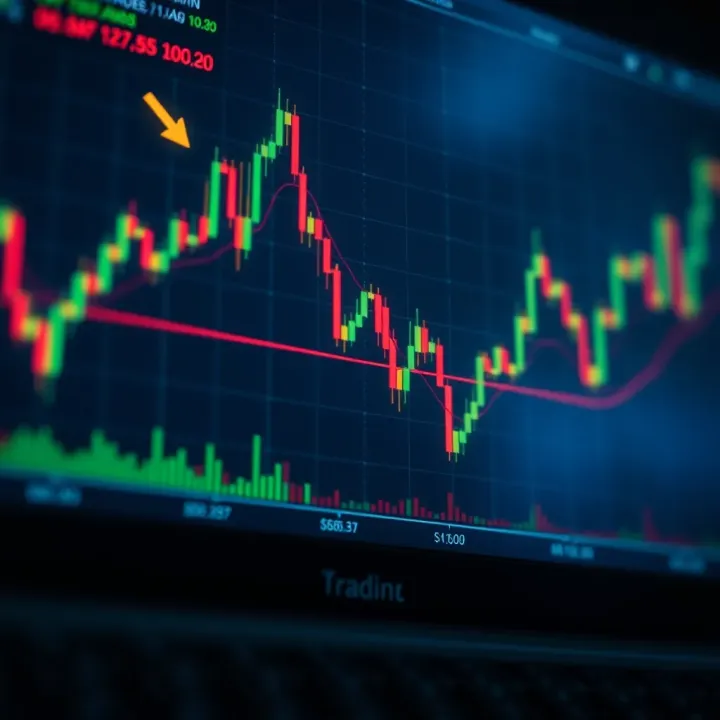
Advantages and limitations: These systems shine in markets with strong momentum, making gains during clear uptrends or downtrends. However, their weakness lies in sideways or choppy markets, where they can generate false signals and losses. Also, trends might reverse unexpectedly due to local economic news or global risk sentiment changes, demanding disciplined exit strategies.
Trading within price ranges: Range-bound systems rely on the observation that prices often swing between support and resistance levels without strong directional moves. Traders buy near the support price and sell near resistance, profiting from predictable oscillations.
Suitability for sideways markets: These systems suit periods when the Rand or other pairs trade flat or with low volatility, such as before major data releases or during holiday seasons. They demand steady monitoring and precise entry points, as breaking beyond the range can cause losses.
Spotting market breakouts: Breakouts happen when price moves decisively beyond established levels of support or resistance. Breakout systems detect these moments using volume spikes, Bollinger Bands, or volatility indicators, signalling potential strong moves.
Managing false signals: Breakouts can mislead traders when prices quickly snap back within the range, known as "false breakouts." To manage this risk, traders in South Africa often wait for confirmation, like a candle close beyond the level or higher volume than usual, before entering.
Very short-term trades: Scalping involves making quick trades that last seconds to minutes, aiming for small but consistent profits. It’s useful in liquid markets like USD/ZAR during Johannesburg trading hours, where spreads are tight.
Speed and execution considerations: These systems need top-notch execution speed and low latency, meaning reliable internet and broker order processing. For South African traders, picking brokers with local servers and minimal slippage is crucial to avoid losing gains on execution delays.
Different forex trading systems respond uniquely to market rhythms. Choosing one that fits your trading style and local factors can make a real difference to your results.
Trend-following suits riding sustained moves.
Range-bound fits flat markets.
Breakout systems hunt sudden surges.
Scalping targets brief opportunities with speed.
Matching your strategy to current market conditions and your personal abilities can improve success rates and reduce unnecessary risk.
Effective forex trading hinges not just on picking the right trade but on managing risk wisely. Integrating risk management into your trading system ensures you don't blow your account on a single bad call, which is especially important in volatile markets like those influenced by the South African Rand. By embedding risk controls into your system, you protect your capital and sustain your trading activity over the long haul.
Stop-loss orders are your guardrails in forex trading. They automatically close a trade once a certain loss level is hit, preventing devastating downsides. For example, if you trade USD/ZAR, setting a stop-loss 1% below your entry price means you limit your loss to 1% of that trade’s value – no matter what sudden forex swings happen. This is crucial on volatile days when unexpected news causes the Rand to jump or tumble.
Similarly, setting take-profit levels locks in gains before the market can reverse. Realistic targets avoid the trap of chasing every pip and potentially giving profits back. If a trader buys EUR/ZAR expecting a 2% rise based on recent patterns, setting a take-profit at that level prevents greed from making them wait too long or hoping for unrealistic moves.
Deciding how much to risk on each trade is just as important as where to enter and exit. Many professional South African traders recommend risking no more than 1-2% of your total trading capital per trade. So, if your account holds R50,000, your trade risk should normally not exceed R500 to R1,000. This helps preserve your account through losing streaks and keeps you in the game.
Leverage amplifies both profits and losses. In forex, leverage of 1:100 isn’t unusual, but those who take on maximum leverage without discipline often wipe out quickly. Adjust your leverage according to your comfort with risk and market conditions. For instance, during Eskom-induced Rand volatility, scaling down leverage limits your exposure when conditions are choppy.
Monitoring volatility indicators like the Average True Range (ATR) helps identify how much the market is swinging. A high ATR on USD/ZAR signals bigger price movement, suggesting you might want wider stop-losses to avoid getting stopped out prematurely or smaller position sizes to manage risk.
Momentum indicators, such as the Moving Average Convergence Divergence (MACD), show if a currency pair is gaining or losing strength. Knowing momentum can prevent entering trades against a prevailing trend, lowering the risk of quick reversals that drain your capital.
Identifying key support and resistance levels gives clues on where prices might bounce or break through. If you trade GBP/USD and spot a strong support just below your entry, you could place your stop-loss just under this zone, balancing protection and room to breathe.
Good risk management isn't about avoiding risk entirely but managing it smartly to keep your trading sustainable and profitable in South Africa's unique forex climate. Without it, even the best trading system can falter.
Together, these approaches form a sturdy risk management backbone, helping you trade smarter, protect your bankroll, and adapt to ever-changing markets.
Selecting the right forex trading system can make a massive difference in your success as a trader. It's not just about picking a flashy setup or copying what others use. You need a system that fits your style, risk appetite, and the realities of the South African market. Testing that system before committing real money helps avoid costly mistakes and builds confidence.
Your forex system's win rate tells you how often it results in a profitable trade. For example, a 60% win rate means 6 out of every 10 trades will be winners. But high win rates alone can be misleading. You also need to consider the risk-reward ratio, which compares the potential profit of a trade against the potential loss. A system with a modest win rate but a high risk-reward ratio (say a 1:3 risk to reward) can be more profitable than one that wins often but with smaller gains.
By looking at win rate and risk-reward together, you get a clearer picture of expected returns and volatility. For instance, a well-balanced system might win 50% of trades but earn twice as much on wins as it loses on losses. This helps South African traders better plan their money management.
Drawdown measures how much your account value falls from a peak before recovering. A system with deep and long-lasting drawdowns can test your patience and capital. Say your trading account drops 20% during a losing streak; you'll need a 25% gain just to breakeven.
Recovery speed is equally important. A system that bounces back quickly after a losing period limits stress and prevents blowing your account. Especially during volatile Rand fluctuations, controlling drawdowns and ensuring swift recovery keeps you in the game longer.
Backtesting uses historical exchange rates and market data to simulate how a trading system would have performed in the past. By running a system against long stretches of South African Rand (ZAR) forex data, you can spot strengths and weaknesses without risking cash.
Though past performance doesn’t guarantee future results, backtesting highlights if a system behaves well across different market conditions, such as high volatility during SARB (South African Reserve Bank) rate changes.
After backtesting, it’s wise to test the system using a demo account or very small live trades. This lets you see if the system handles real-time price feeds, slippage, and broker execution delays—factors often absent from backtests.
A South African trader could, for example, use a demo account on a local-regulated broker like IG or FXTM to verify the system during Rand volatility spikes around significant economic events.
The South African Rand often moves sharply against the US dollar or Euro due to political news, commodity prices, or global risk sentiment. A trading system tuned for less volatile pairs may falter in this environment.
Adapting your system to handle sudden ZAR swings—perhaps by widening stop losses or adjusting position sizes—can prevent premature exits and unnecessary losses.
South African market hours overlap partly with London and New York sessions but have unique liquidity patterns. Liquidity tends to thin during local night hours or national holidays, causing wider spreads and unpredictable prices.
Tailoring your forex system to trade during high-volume local hours or avoiding trades during less liquid times helps reduce risk. For instance, focusing on the overlap between London and New York sessions often brings tighter spreads and better execution.
Choosing and testing the right forex trading system is not about finding a one-size-fits-all solution but selecting a method that aligns with your realities and testing it thoroughly before risking real Rand. Adaptation and careful evaluation are your best allies for steady success.
Access to reliable platforms and resources makes a real difference for forex traders in South Africa. Using well-supported brokers, efficient software, and vibrant educational communities can improve trading outcomes and ease the day-to-day challenges that come with the market's unpredictability. This section breaks down the key players and tools to help you get the most from your forex system.
Reputation and regulation play a big role in broker selection here. South African traders should look out for brokers authorised by the Financial Sector Conduct Authority (FSCA) or other reputable bodies. This kind of oversight means your funds are safeguarded and trading practices remain transparent. For instance, brokers like IG and Plus500 have local licences, which assures compliance with South African laws. Without proper regulation, you risk dealing with untrustworthy firms that may have hidden fees or poor execution.
Account types and costs matter just as much. Many brokers offer multiple account options tailored to different trader profiles — from beginners to seasoned pros. Some accounts require a higher minimum deposit but give better spreads or access to more instruments. Costs like spreads, commissions, and swap fees can eat into profits, so compare these carefully. For example, FNB's online trading platform offers competitive fees for Rand-based accounts, which can be advantageous compared to dealing with conversion costs on international accounts.
MetaTrader and other platforms serve as the backbone for many forex traders. MetaTrader 4 and 5 remain the go-to software across South Africa thanks to their user-friendly interface and wide indicator compatibility. These platforms support automated trading scripts and backtesting, invaluable for system testing. Other platforms like cTrader provide alternative charting tools and faster execution, suiting traders who prioritise speed and customisation.
Third-party analytics and signal services supplement these platforms by offering detailed market analysis and trading signals. Services like TradingView or Autochartist provide pattern recognition and updates that help traders catch opportunities early. However, relying only on signals can be risky; it's better to use them to inform your existing system rather than follow blindly. This kind of support fits well with South Africans who want an edge but prefer to remain in control.
Local trading forums and groups foster real connections between traders. Platforms like the MyBroadband Trading Forum or Facebook groups dedicated to South African forex can be a treasure trove of shared strategies, warnings about scams, and tips on navigating local market quirks like Rand fluctuations. Engaging with peers also offers psychological support, which many underestimate in trading.
Training courses and webinars build solid foundations and ongoing skills. Providers such as Learn Forex Trading SA and online courses by MTN offer sessions tailored to local market contexts. Webinars featuring experienced South African traders allow you to ask questions specific to our time zones and economic conditions. Investing in education is a smart step as it sharpens your approach while adapting your strategies to local realities.
Having the right brokers, tools, and learning resources all together can transform how you trade the forex market in South Africa. Be discerning in your choices, and regularly update your knowledge to stay ahead in this fast-moving game.
📈 Explore the main differences between binary and forex trading, plus key tips for South African traders on regulation, risks, and effective trading strategies.

📚 Discover top forex trading books tailored for South African traders. Learn to pick guides, grasp essential concepts, and get practical tips for success in forex.

📈 Find the top laptops for forex trading in South Africa – reliable, affordable, with long battery life to tackle data costs and loadshedding challenges. 💻⚡
🇿🇦 Learn how forex trading works in South Africa, from basics and risk management to market factors. Trade smartly and confidently with local insights 💱📈
Based on 15 reviews