

Basics of Forex Trading for South Africans
🌍 Learn the essentials of forex trading, from currency pairs to risk management, with practical tips tailored for South African traders. 📈💰
Edited By
Benjamin Reed
Binary trading and forex trading are two distinct approaches to financial markets, each carrying its own quirks and challenges. For South African traders weighing their options, understanding the core differences is key to making informed decisions.
Binary trading is straightforward: you predict whether the price of an asset—be it a currency, commodity, or stock—will rise or fall within a fixed timeframe. If you’re right, you receive a predetermined payout; if wrong, you lose your stake. It’s like placing a bet on a horse track but in financial markets. Forex trading, on the other hand, involves buying one currency and selling another with the aim of profiting from exchange rate movements. It’s more complex, requiring analysis of economic indicators, geopolitical events, and market sentiment.
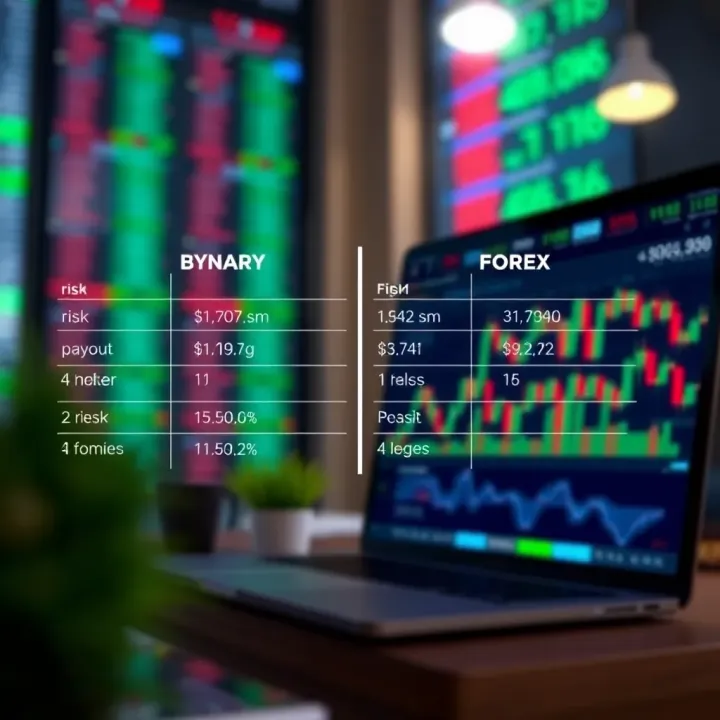
Binary trading offers fixed risk and reward, making it appealing for beginners or those who prefer defined outcomes. Forex trading allows for more flexibility but comes with potentially unlimited risk and reward.
For South African traders, the regulatory environment also matters. The Financial Sector Conduct Authority (FSCA) keeps a close eye on local forex brokers, ensuring they adhere to rules designed to protect investors. However, many binary trading platforms operate offshore, often with less oversight, which raises concerns about fraud and fair practice.
Accessibility is another aspect. Forex markets run 24 hours from Sunday evening to Friday night, providing ample opportunity to trade around your schedule. Binary options are usually tied to shorter expiry times, sometimes just minutes, which can encourage rapid decisions rather than considered strategies.
Tools and knowledge required differ too. Forex trading relies on technical analysis, economic calendars, and sometimes automated signals. Binary trading is simpler but can lead traders to focus on luck rather than skill.
Ultimately, your choice depends on your risk appetite, trading style, and commitment to learning. Understanding these core distinctions helps you navigate the markets confidently while protecting your capital against unnecessary risks.
Getting a good grip on binary and forex trading basics is essential for any trader looking to make sense of these markets. Each has its own way of working, risks, and rewards, making an understanding of the fundamentals key to deciding which suits you better. For example, while both involve predicting market moves, binary options simplify trades into a yes/no outcome, whereas forex trading offers a broader scope with fluctuating profits based on price changes.
Binary trading means predicting whether an asset’s price will be above or below a specific level at a given time. Unlike traditional shares or forex where profits depend on how much the price moves, binary trading offers a fixed payout or loss. For instance, you might choose that the rand will strengthen against the dollar over the next hour. If that happens, you get a predetermined return. If not, you lose your stake.
Binary options come in various forms but the most common is the simple "call/put" trade: 'call' if you expect the price to rise, 'put' if you expect it to fall. Other types include "one touch" options, where the price just needs to touch a target at any time before expiry, and "range" options, where the price must stay within a certain range. Each brings different risk levels and payout structures.
Expiry times in binary trading can vary widely. They often start as short as 30 seconds and can stretch up to several hours or even days. Because of this, binary trading suits those who prefer quick decisions. Payouts usually range between 70% and 90% of your stake, but missing the prediction often means losing 100%, so risk management is crucial.
Forex trading involves buying one currency while selling another, betting on the exchange rate changes. Unlike binary options, profits or losses are not fixed but depend on how much the price moves. This means a trader can aim for small, consistent gains or larger profits on bigger moves. The market operates 24/5 globally, giving South African traders flexibility to trade during off-hours.
The forex market mostly involves major pairs like USD/ZAR (US dollar/South African rand), EUR/USD (euro/dollar), and GBP/USD (pound/dollar). The USD/ZAR pair is especially popular locally, as economic news or political developments in South Africa often cause notable price shifts. Understanding these pairs and their drivers can provide valuable trading clues.
Forex brokers allow leverage, which means you can control a larger position than your actual capital. For example, with 1:100 leverage, a R1,000 deposit lets you trade R100,000 worth of currency. While this magnifies gains, it also increases losses, so managing your margin and knowig your limits is vital to prevent rapid account depletion.
Whether you lean towards binary trading’s simpler structure or the more complex but flexible forex market, knowing these basics helps you make informed choices that fit your risk appetite and trading style. Especially in South Africa, considering market hours, currency pairs with local relevance, and leverage rules set by the FSCA makes all the difference.
Understanding the main differences between binary trading and forex trading is key for anyone deciding where to put their money. These differences affect how you manage risk, choose strategies, and handle costs. Knowing them helps you pick the approach that fits your trading style and goals, especially in a market like South Africa where factors such as regulation and market access also come into play.
Binary trading offers a fixed return if your prediction is correct — typically, you know upfront if you’ll make a set profit, such as 70% on your stake, or lose it all if you’re wrong. Forex trading, on the other hand, involves variable profits and losses since price movements can be small or large, and your profit depends on the size and direction of those moves. For example, if you buy R10,000 worth of EUR/ZAR and the price moves 1%, your profit or loss changes with that movement. This fixed versus variable outcome influences how much risk you’re willing to take.
In binary trading, you usually risk just your stake per trade — so the maximum loss is known. Forex trading can expose you to larger losses if the market moves sharply against you, especially when using leverage. But forex traders can use tools like stop-loss orders to limit their losses, which binary options don't typically provide. Hence, managing risk actively is more crucial when trading forex.
Binary trades often have short expiry times, ranging from minutes to a few hours. This encourages quick decision-making and a focus on short-term market moves or news impact. A typical binary trader might bet on whether the rand will strengthen against the dollar over the next 15 minutes, aiming to capture rapid fluctuations.
Forex trading usually involves a broader range of time frames — from minutes and hours to days and weeks. Traders analyse charts, trends, support and resistance levels, and economic indicators to guide their decisions. For instance, a forex trader might hold a position on GBP/ZAR based on expected interest rate changes over several weeks.
Because binary trading involves fixed expiry times and defined outcomes, decisions tend to be quicker and based on short-term spikes or dips. Forex trading requires more patience and a deeper understanding of market dynamics since positions can be adjusted or held long-term. This means forex traders often develop more detailed strategies and rely on continuous market monitoring.
Binary trading usually incorporates its costs into the payout ratio with no separate commissions — but the lower payout on some trades effectively acts as the broker’s cut. Forex trading, however, involves spreads (the difference between buy and sell price) and sometimes commissions. For example, a typical spread on EUR/USD might be 1.2 pips, costing you more if you trade frequently.
Beware in both markets. Some binary brokers might add fees for withdrawals or inactivity. Forex brokers may charge swap fees (costs for holding positions overnight) or require minimum account balances. South African traders need to check broker terms carefully, especially when using international platforms, to avoid surprise costs.
Understanding these differences helps you manage expectations, risks, and costs better before committing your capital to binary or forex trading.
When venturing into binary or forex trading, picking the right broker is as important as understanding the market itself. Regulatory oversight and careful broker selection are key to avoiding scams and ensuring your trading journey is secure and fair. South African traders need to navigate both local rules and the broader landscape of international brokers.
The Financial Sector Conduct Authority (FSCA) stands as the watchdog for financial services in South Africa, including forex trading. Its job is to protect investors and maintain market integrity. When brokers register with the FSCA, it means they comply with local law, follow fair practices, and have set standards for reporting and client protection. This registration is your first checkpoint before trusting a broker with your funds.
Binary trading, however, is a little trickier within South African regulation. Unlike forex, binary options trading is less explicitly regulated or sometimes even prohibited by FSCA due to concerns around the high risks and potential for fraud. Consequently, many binary options brokers operating locally may be unregistered or operate offshore without FSCA oversight. This lack of regulation has ongoing effects on how legal or safe various binary offering brokers are within the country.
Finding a dependable broker goes beyond just a slick website. Look for brokers with transparent trading conditions, clear fee structures, and accessible customer support. Features such as low spreads, a variety of trading tools, and a user-friendly platform significantly affect your trading experience. For example, some South African traders favour platforms that provide Rand accounts to avoid currency conversion hassles.
Client fund protection is essential. Trustworthy brokers keep your money separate from their operating funds in dedicated accounts, minimising risks if the broker runs into financial trouble. Some go further by offering compensation schemes or insurance. For instance, brokers regulated by the FSCA must comply with strict policies on safeguarding client funds, which isn't always guaranteed with offshore brokers.
Before committing, check independent reviews and the broker’s reputation within the trading community. Word of mouth, forums, and regulatory records reveal red flags such as withdrawal delays or hidden charges. A broker with a solid track record will transparently handle these concerns and maintain fair trading practices over time.
Always remember: an FSCA-regulated broker plus positive user feedback give you the best chance of a trustworthy, smooth trading experience.
Being cautious and informed when choosing your broker protects your capital and enhances your chances of trading success in the volatile world of binary and forex markets.
For South Africans dipping their toes into binary or forex trading, practical guidance is essential to navigate local nuances and market realities. This section focusses on concrete steps to help traders manage capital, control risk, and set realistic expectations.
Minimum deposit requirements differ widely among brokers and directly impact your access to trading. Some platforms allow deposits as low as R100, which can be attractive for beginners testing the waters. However, a lower deposit might limit your ability to diversify trades or absorb losses. For example, starting with R500 at a reputable broker could provide more breathing room to explore strategies without risking it all on one move.
Practically, always check the minimum deposit upfront and compare multiple brokers. Beware of offers pushing big deposits with bonuses attached; these often come with strings like high trading volumes before withdrawals.
Demo accounts and practice trading are invaluable tools, especially when funds are tight. Most brokers, including those regulated by the FSCA, offer free demo accounts with virtual currency to practise without financial risk. This lets you familiarise yourself with the trading interface, try out strategies, and understand order execution before committing real money.
For instance, if you’re trialling forex trading using MT4 or MT5 platforms popular in South Africa, demo accounts can help build confidence. Use this phase to also understand how leverage impacts trades—something easily overlooked by new traders.
Setting stop-loss and take-profit levels protects your capital and locks in profits. These pre-set points automatically close trades when the market moves against you (stop-loss) or reaches your target (take-profit). Without them, emotional trading can lead to bigger losses or missed opportunities.
For example, if you buy euros against the rand at R18.50 expecting it to hit R19.00, setting a stop-loss at R18.30 can cap your downside if the market turns unexpectedly. This simple step can save you from significant losses during volatile sessions.
Avoiding common mistakes is key to longevity in trading. New traders often fall into traps like chasing losses, overtrading, or neglecting strategy. Keeping a trading journal to record reasons for entry and exit decisions can help spot patterns and refine your approach.
It’s useful to remember that no trade is guaranteed, and accepting losses as part of the game prevents emotional decisions.
Understanding market volatility is particularly crucial in South Africa, where economic data releases, political events, or Eskom loadshedding announcements can cause sharp price swings. Volatility creates both risk and opportunity but demands patience and adjustment.
For example, during a major SARB repo rate change, currency pairs can jump significantly, so adjusting stop-loss levels or trade sizes can prevent getting caught on the wrong side.
Practical trading means combining careful money management with awareness of local factors influencing markets. This blend helps South African traders make choices that reflect both global market realities and domestic conditions.
In short, start small, use demo accounts to build skill, set firm risk limits, learn from mistakes, and stay alert to how local events shape market moves. These principles provide a steadier footing whether trading binaries or forex.
Choosing between binary trading and forex trading comes down to your personal goals, risk appetite, and how much time you want to commit. Both have clear pros and cons, but understanding these can save you from costly mistakes. For instance, if you prefer straightforward trades with fixed outcomes, binary options might fit your style. On the other hand, if you want to engage in a wider market with variable profits and more control over your trades, forex trading could be more suitable.
Your trading goal—whether it's quick wins or steady growth—should guide your choice. Binary trading is often pitched as a way to make fast money, with trades lasting minutes to hours and clear payout structures. Yet, the risk here is simple: you either win a set amount or lose your stake entirely. This all-or-nothing setup means your losses are capped, which appeals to those who prefer risk limits upfront.
Forex trading, by contrast, demands more patience and strategy. Since profits and losses fluctuate with market movements, you can potentially earn beyond fixed amounts but also face significant losses if the market turns against you. Using tools like stop-loss orders helps mitigate risks, but it requires more market knowledge and discipline. Traders who want to build long-term portfolios or take advantage of market trends generally lean towards forex.
Look at it like this: if an investor wants to play it safe with a limited budget, starting with binary options or forex demo accounts helps. But bear in mind that binary trading’s quick turnaround can feel like whipping through meals at a food court—fast but sometimes risky. Forex trading is more like cooking a homemade potjiekos—it takes time, attention, and skill but can be more rewarding.
South African traders face unique conditions, including local regulations from the Financial Sector Conduct Authority (FSCA) and the reality of frequent Eskom loadshedding affecting internet connectivity. It's wise to choose brokers regulated by FSCA or internationally recognised with strict compliance standards to protect your investments.
Consider also the ease of access. Forex brokers often require higher minimum deposits and might involve more complex platforms, while some binary brokers allow beginners to start with smaller amounts. That said, the binary options sector has seen crackdowns globally for scams, so vigilance is key.
Moreover, SA traders should factor in local market hours, rand volatility, and even municipal internet reliability when trading. Practical steps include setting clear daily limits, using strong data backups, and keeping an eye on market news relevant to the rand and local economic conditions.
At the end of the day, no trading option is one-size-fits-all. Knowing your limits and researching thoroughly will help you navigate safely and make decisions that suit your pocket and lifestyle.
🌍 Learn the essentials of forex trading, from currency pairs to risk management, with practical tips tailored for South African traders. 📈💰

Explore top Forex trading seminars in South Africa 🇿🇦. Learn how to select the best seminar, key topics, and tips to get the most from your experience 📈📝.

Stay alert to forex trading scams targeting South Africans 🚨 Learn key signs, protect your money, and report fraud to keep investments safe.
📈 Ready to start forex trading in South Africa? Learn how to choose brokers, register your account, and get top tips for beginners. Start smart today!
Based on 14 reviews