

Understanding Risk Management Frameworks
Explore key risk management frameworks 🛡️, their benefits, and how to tailor strategies for your organisation's unique needs across industries. 📊
Edited By
Daniel Foster
A risk management matrix is a simple but effective tool widely used in projects and business operations to pinpoint, evaluate, and rank potential risks. It lays out risks in a table, matching how likely they are to occur against the damage they could cause. This approach helps teams and decision-makers spot which areas need attention first, especially when resources like time and money are limited.
In the South African business landscape, where factors like loadshedding, economic fluctuations, and regulatory changes play a big role, understanding risk through this matrix is particularly valuable. For example, a financier assessing an investment portfolio might use the matrix to evaluate political instability risk versus market volatility, highlighting where to focus due diligence.

The matrix usually categorises risks by probability—from rare to almost certain—and impact—from negligible to catastrophic. Placing risks in this grid allows organisations to visualise their exposure quickly. Traders and analysts can then develop targeted strategies, such as avoiding certain assets or planning contingencies.
A well-constructed risk management matrix transforms abstract threats into clear priorities, enabling firms to act swiftly and systematically.
Setting up a matrix involves several steps:
Identifying risks: Gather insights from project teams, financial reports, or operational data.
Assessing likelihood: Estimate the chance each risk will happen, based on experience or statistics.
Evaluating impact: Determine the severity of consequences, considering financial loss, reputational damage, or operational disruption.
Plotting risks: Place each risk in the matrix, showing where it lands on the likelihood-impact scale.
This straightforward visual tool offers advantages over purely qualitative assessments. It supports consistent decision-making, flags urgent risks, and helps justify where to allocate budgets for risk mitigation.
In this article, we’ll explore how to build a risk management matrix tailored to South African businesses, practical applications, and tips for ensuring it remains a living document that guides risk awareness and response effectively.
Understanding what a risk management matrix is forms the foundation for using this tool effectively in any trading or investment setting. This matrix offers a straightforward visual means to gauge both the likelihood and potential impact of risks, helping professionals like analysts and brokers focus attention and resources where they matter most. For instance, a trader who spots a high-likelihood, high-impact risk—such as sudden currency volatility—can prioritise strategies to mitigate exposure rapidly.
By defining the risk management matrix clearly, you also set boundaries on its use, ensuring everyone in a team interprets risk levels consistently. This clarity becomes particularly valuable in South African markets that wrestle with unpredictable factors like loadshedding or fluctuating commodity prices.
A risk management matrix is essentially a grid or table that maps out risks based on two key dimensions: the probability of a risk occurring and the severity of its impact. Each identified risk is placed somewhere on this grid, allowing quick visual prioritisation. This means you can see at a glance which risks require immediate attention, which are tolerable, and which might be deferred or monitored.
This tool is practical because it simplifies complex risk assessment data into something accessible, especially when juggling multiple risks. For example, in financial advising, understanding whether a potential portfolio risk is low-likelihood but severe impact – such as regulatory changes – helps guide client advice better.
Likelihood categories estimate how probable a given risk is on a scale, often ranging from rare to almost certain. These categories help you systematically assess risks instead of relying on gut feel alone. In practice, you might label a risk like a data breach at a fintech firm as “possible” if it has occurred in the industry elsewhere within the last year, whereas a default on a government bond could be “rare”.
Using such categories supports consistency in risk assessment meetings, ensuring traders and analysts speak the same language about risk probability. It's not just about labelling; it directs how often you should monitor and review particular risks.
Impact levels rate how severe the consequences of a risk would be if it materialises. They usually follow a scale from negligible to catastrophic. This component allows you to differentiate between risks that might cause minor schedule delays and those that could trigger significant financial losses or reputational damage.
For example, a disruption to supply chains in retail may have a medium impact, causing stock shortages but not system failure, while a cyberattack on client data at a brokerage may rank high due to regulatory penalties and trust erosion. These distinctions shape your response priority.
Risk ratings combine likelihood and impact into a single metric, often by multiplying assigned numeric values. This scoring helps rank risks clearly, highlighting those that need urgent mitigation. For instance, a risk with a likelihood of "likely" (4 on a 5-point scale) and high impact (5 out of 5) would score 20, signalling high priority.
Using this numerical system aids in creating risk registers that finance teams or traders can refer back to regularly. The quantification also supports reporting and decision-making, making it easier to explain to clients or stakeholders why certain risks receive more attention or resources.
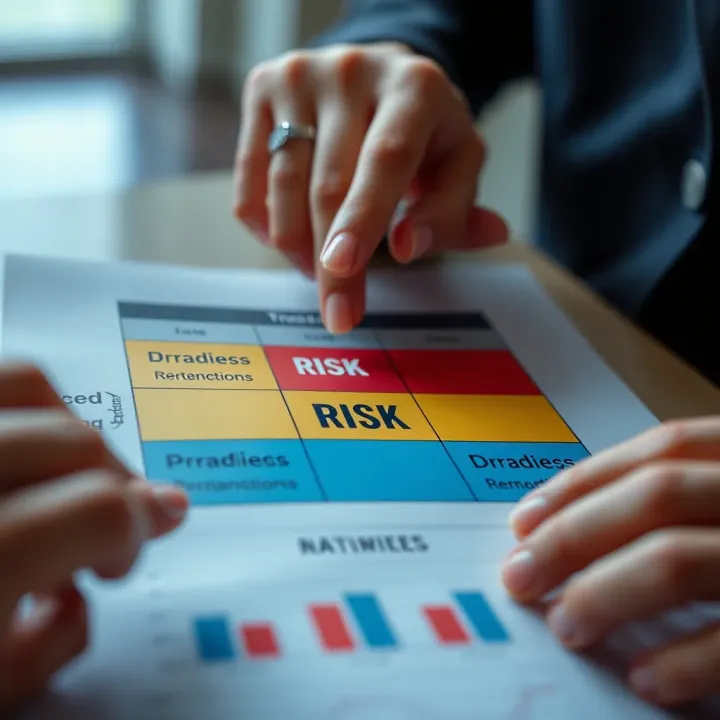
A well-defined risk management matrix turns abstract risk concerns into clear action points, enabling better control over exposure in volatile markets.
By understanding each of these elements, traders, investors, and financial professionals can adopt a common framework to assess and manage risks effectively.
Creating a risk management matrix starts with a clear process that helps traders, investors, and analysts get a handle on potential pitfalls before they hit. This step is practical—it’s about spotting risks, sizing up their chances and impact, then pinning them neatly on a grid that shows what needs your attention first. South African markets and projects, challenged by factors like loadshedding or regulatory shifts, especially benefit from this clear roadmap.
The first step in crafting your matrix is to identify possible risks. This means looking widely at everything that could influence your investment or project negatively. In financial markets, this might include exchange rate fluctuations, sudden policy changes from SARS, or unexpected shifts in commodity prices. For example, a mining project could face risks ranging from environmental protests to equipment breakdown during peak output periods. The aim is to list these risks without filtering, capturing the full picture so that nothing important slips through.
Once risks are on the table, assess how likely each one is to happen and the potential damage it could cause. Likelihood usually fits into categories like 'rare', 'unlikely', 'possible', 'likely', or 'almost certain', giving you a scale to work with. Impact covers the scale of loss or disruption—think 'insignificant' through to 'catastrophic'. For investors, a currency crash might be ‘possible’ but ‘catastrophic’ in impact, while a minor delay in project approvals could be ‘likely’ but ‘moderate’ in effect. Accurate assessment requires data, experience, and sometimes local knowledge, so be sure to ground your ratings in reality.
The final step involves placing each risk on the matrix based on its assessed likelihood and impact. The matrix is typically a grid where one axis represents likelihood and the other, impact. Each risk finds its spot on this grid, visually signalling its priority. High-likelihood, high-impact risks appear in the top-right corner and immediately draw attention. This visual tool helps you quickly see which risks demand urgent action and which can be monitored more casually. For instance, trade disruptions due to loadshedding might plot near ‘likely’ and ‘high impact’ for logistics firms, indicating a need for backup power solutions.
A well-constructed risk management matrix turns abstract hazards into clear, manageable priorities, allowing financial and business professionals to focus on what really counts.
Creating your risk matrix with careful identification, solid assessment, and clear plotting lays the foundation for making smarter decisions in dynamic South African markets.
Applying the risk management matrix in South African business environments goes beyond ticking boxes — it’s about facing local realities head-on and making informed decisions that protect investments and operations. South Africa’s unique economic, social, and infrastructural conditions mean that risks rarely come from one source; they often intersect and amplify each other. Using a risk matrix helps companies prioritise issues and assign resources wisely, especially when budgets are tight and uncertainties high.
In the construction sector, projects frequently grapple with delays due to labour strikes, volatile material prices, and environmental hurdles like unseasonal rains or flooding. A risk matrix allows project managers to plot these factors in terms of how likely they are to happen and their potential impact on project timelines and costs.
For example, a construction firm working on a road in Gauteng may rate the likelihood of labour unrest as medium but the impact as high, necessitating contingency plans such as offset negotiating schedules or engaging local communities. This approach brings clarity to prioritising risks that could cause costly stoppages.
Mining operations face risks that range from safety hazards underground to shifting commodity prices globally. In South Africa, political changes and regulatory updates also add layers of risk that must be assessed continually.
Using a risk matrix enables mineral companies to see which dangers need immediate attention and which ones require monitoring. For instance, Eskom power cuts might be rated high on likelihood and impact for an underground mining project, raising the urgency of securing backup power solutions. Plus, fluctuating rand-dollar trends can affect export earnings and, by extension, investment decisions.
Retailers and their supply chains in South Africa juggle risks like transport disruptions caused by protests or fuel price hikes. The matrix helps businesses map out these risks and plan accordingly, for example, by diversifying suppliers or holding additional stock ahead of known risk periods such as politically charged months.
A supermarket chain dealing with regional truck strikes might use the risk matrix to identify a high-impact risk with medium likelihood and thus invest in alternative delivery routes or smaller local warehouses to avoid stockouts.
Loadshedding remains a top operational risk for businesses across sectors. Incorporating Eskom’s scheduled outages into the matrix forces companies to evaluate how power interruptions affect production, customer service, and IT systems. A medium likelihood of stage 3 loadshedding with a high impact on manufacturing can prompt urgent investment in generators or solar systems.
Besides loadshedding, water restrictions, municipal service disruptions, and fluctuating exchange rates all feature in a South African risk matrix. Factoring in these elements not only paints a realistic picture of vulnerabilities but also steers companies toward practical actions.
By grounding risk assessments in South African-specific challenges, the risk management matrix becomes a vital tool — helping leaders manage uncertainty, keep projects on track, and protect bottom lines.
A risk management matrix does more than just identify risks — its main strength lies in helping you decide which risks need your immediate attention and which can be kept on the back burner. Prioritising risk responses means focusing your resources where they matter most, especially when budgets and time are tight. For traders and financial analysts, this focus ensures decisions are backed by a solid understanding of how likely risks are and the damage they could cause.
The risk matrix categorises risks based on their likelihood and impact, guiding you to the appropriate response strategy. For example, a high-impact but low-likelihood event like sudden regulatory changes might be best transferred through insurance or hedging. Conversely, a highly likely but low-impact risk—such as minor daily stock price fluctuations—might be acceptable without action.
Mitigation usually targets risks with both high likelihood and impact, such as currency volatility affecting imports. Measures could include forward contracts or diversification. Avoidance involves steering clear of risky activities entirely; for instance, a broker might avoid trading in unstable markets to prevent exposure. Weighing these options carefully is vital, as South African traders frequently face unique risks like exchange rate swings influenced by global markets and local economic factors.
Incorporating the risk matrix into your broader risk management plan makes it a living tool rather than a one-off exercise. Use it to communicate risk priorities clearly across your team or clients. Include it in regular reviews—monthly or quarterly—to reflect changes in market conditions, new regulations, or company strategy shifts.
For instance, an investment firm might update their matrix after a SARB interest rate announcement to reassess credit risk exposures. Embedding the matrix ensures risk management isn’t an afterthought but a constant, measurable part of daily decisions. Plus, it helps with compliance and reporting, showing how risks are identified and dealt with methodically.
Using a risk management matrix to prioritise responses keeps focus on the biggest threats without wasting effort on minor issues. It’s about working smarter, not harder.
Assess risks realistically considering both likelihood and impact.
Align risk responses with business tolerance and available resources.
Review regularly to keep the matrix relevant and actionable.
Communicate risk priorities clearly throughout the organisation.
Making these steps routine can help South African businesses and traders weather uncertainties — like loadshedding impacts or currency volatility — with greater confidence and control.
Using a risk management matrix effectively requires attention to detail and a clear understanding of both its strengths and limitations. While the matrix simplifies risk prioritisation by plotting likelihood against impact, overlooking best practices or falling into common pitfalls can undermine its usefulness. Traders, investors, analysts, and brokers in South African contexts need to not only apply the matrix with care but also revisit and refine it regularly to reflect changing business conditions.
Accuracy in assessing risk likelihood and impact is key. Inconsistent or subjective evaluations can skew the matrix, sending resources after the wrong risks. For example, a project manager in a Johannesburg construction firm might underestimate the impact of labour strikes due to recent peaceful periods, yet historical data and local labour relations trends suggest strikes are quite likely. Using standard criteria, supported by data where possible, helps maintain objectivity. Teams should agree on definitions—what counts as 'likely' versus 'possible', or 'major' versus 'moderate' impact—then apply these consistently across all risks. This uniformity prevents confusion and misallocation of effort.
While a matrix simplifies risk understanding, the danger lies in oversimplifying complex risks that don’t fit neatly into a grid. Some risks involve interconnected factors or cascading effects, common in mining or financial markets, which a single point on a matrix may not capture fully. For instance, loadshedding can affect retail supply chains via power cuts but also cause logistical delays, safety hazards, and customer dissatisfaction simultaneously. Over-reliance on a simplistic matrix may lead to underestimating these ripple effects. Adding qualitative notes or separate analyses alongside the matrix gives a fuller picture and guards against tunnel vision.
Risks evolve, so should your matrix. South African businesses face shifting terrains: political changes, currency volatility, regulatory updates, and unexpected events like drought or protests. What seemed low risk last quarter might become critical after new developments. Setting a schedule to review the matrix ensures it stays relevant. For example, an investment analyst updating risk scores after SARB adjusts interest rates can better anticipate market shifts. Also, bringing in fresh eyes or external auditors occasionally can help catch blind spots. Continuous updates keep risk management proactive rather than reactive.
Consistently applying accurate assessments, acknowledging complexity beyond the grid, and updating frequently prevent your risk management matrix from becoming a stale or misleading tool.
Employing these practices solidifies the matrix’s role as a practical guide for prioritising risks. Avoiding the common pitfalls and embracing thorough, contextual thinking will help South African businesses navigate uncertainty more confidently.
Explore key risk management frameworks 🛡️, their benefits, and how to tailor strategies for your organisation's unique needs across industries. 📊

📊 Explore why risk management is key in South African business: reducing harm, aiding decisions, boosting growth, compliance, and resilience.
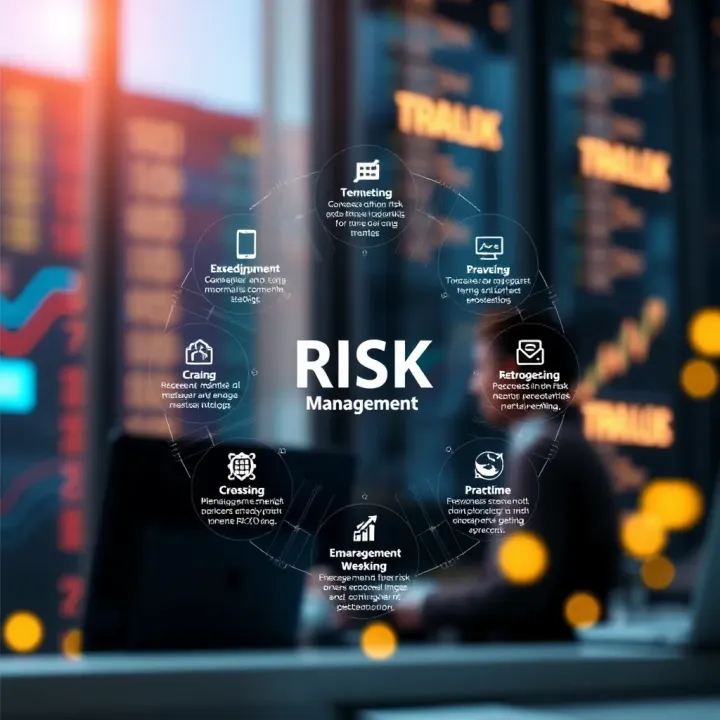
🛡️ Discover why risk management is essential for protecting businesses from threats, improving decisions, and safeguarding resources effectively.

Learn the step-by-step risk management process 🔍 from spotting threats to monitoring controls, helping SA businesses protect assets and reduce uncertainty 📉.
Based on 9 reviews