

Understanding the Impact of the Economic Calendar on Markets
📅 Discover how the world economic calendar shapes markets and aids decision-making for South African investors. Learn key indicators and smart strategies to stay ahead.
Edited By
Victoria Grey
An economic calendar lists important dates and events that influence South Africa’s financial markets and economy. For traders, investors, and financial advisors, keeping an eye on this calendar can give a real edge when making decisions.
South Africa's market reacts to various domestic and international economic releases. These include data on inflation, employment, interest rates, and trade balances. Recognising when such reports drop helps you anticipate market movements, manage risk, and spot investment opportunities.
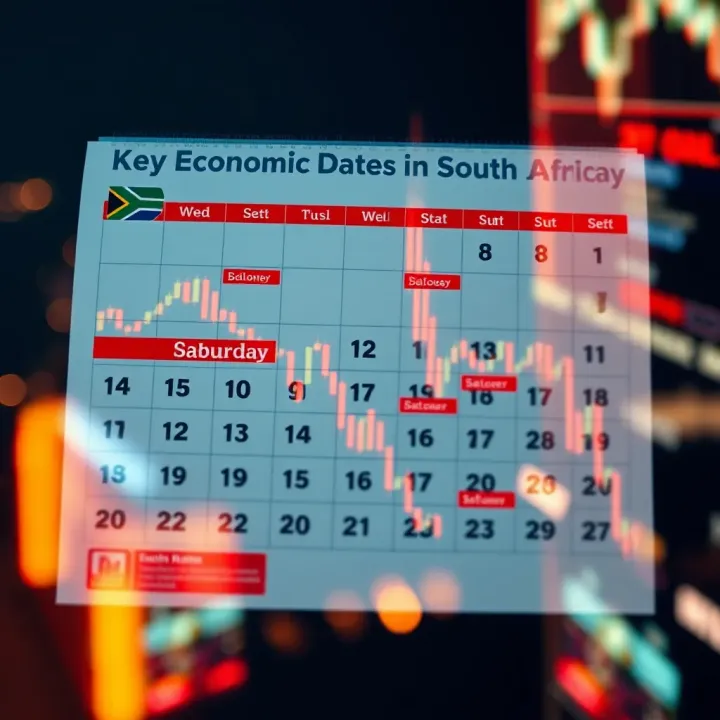
Understanding the timing and meaning of economic indicators is key to navigating South Africa’s sometimes volatile markets, especially given factors like loadshedding and global economic shifts.
Common events on the calendar are:
South African Reserve Bank (SARB) interest rate decisions: These affect lending rates and the rand.
Consumer Price Index (CPI) inflation figures: Inflation influences consumers and business costs.
Labour market reports on unemployment rates: These show economic health and consumer spending capacity.
Trade balance reports: Reflect South Africa’s import-export dynamics and currency pressure.
Besides these local indicators, global events such as US Federal Reserve meetings or oil price updates also impact South African markets given their interconnected nature.
Knowing where to find reliable data — like from SARB, Statistics South Africa, or Market News Agencies — helps you stay well-informed. Using this information practically means adjusting portfolio strategies, timing asset purchases, or advising clients with up-to-date insights.
This guide breaks down what to watch in South Africa’s economic calendar and how to use it smartly, helping you stay confident amid shifting economic winds.
An economic calendar is essentially a schedule listing key dates for economic releases, policy announcements, and other events that influence financial markets. For South African traders, investors, and analysts, it provides a snapshot of when crucial data like inflation figures, GDP growth, or interest rate changes are due. Knowing these dates helps users anticipate market movements rather than reacting blindly.
At its core, an economic calendar compiles various macroeconomic indicators and events into a single reference point. It covers government reports, such as Statistics South Africa's CPI numbers, South African Reserve Bank (SARB) interest rate decisions, and employment statistics. It may also include global developments with local impact, like US Federal Reserve meetings or China’s trade data, given South Africa’s exposure to global trade.
The scope extends beyond just release dates; some calendars provide consensus forecasts or previous figures, helping users assess market expectations versus actual results. This context plays a vital role in interpreting how upcoming numbers might affect markets.
Economic data can move the needle on the JSE (Johannesburg Stock Exchange), the rand's exchange rate, or bond yields. For instance, a higher-than-expected inflation print usually puts pressure on the SARB to raise interest rates, which strengthens the rand but may weigh on stock prices. Conversely, weaker GDP growth might signal slower business activity, causing stock prices to dip.
The rand is often sensitive to global risk sentiment shaped by international economic events on the calendar. For example, US interest rate hikes typically lead to capital outflows from emerging markets including South Africa, causing rand depreciation. Local traders closely watch these events to manage foreign exchange exposure.
A wide array of market participants rely on the economic calendar. Traders use it to time their entries and exits, avoiding surprises that lead to volatile price swings. Investors study it to align portfolio rebalancing with economic cycles. Financial advisors and analysts use calendar insights to advise clients on risk and opportunity windows.
Business owners and corporate finance teams also keep an eye on the calendar for planning purposes — for example, preparing for budget announcements that might affect tax or interest expenses. Even policy makers and journalists consult it to track the flow of economic information.
Staying informed of scheduled economic data and events gives you an edge, whether you’re hedging currency risks or deciding when to buy shares. The economic calendar is a practical tool to navigate the complexities of South Africa’s markets with confidence.
In summary, understanding what an economic calendar shows and why it matters is the first step for anyone wanting to make smarter, timely financial decisions in South Africa.
Economic indicators give traders, investors, and analysts solid clues about the health and direction of South Africa's economy. Understanding these key figures helps in timing investment moves, managing risks, and interpreting market reactions. Let's break down the main indicators that feature prominently in the economic calendar.
Inflation measures how prices increase over time and directly affects purchasing power. South Africa’s CPI reports, issued monthly by Statistics South Africa, track changes in the cost of a basket of goods and services. When inflation climbs above the South African Reserve Bank’s target band (typically 3%–6%), it can trigger interest rate adjustments or impact consumer spending habits.

For example, if CPI spikes due to higher fuel or food prices—both influential in Mzansi—investors might expect a more cautious market response, especially in retail and consumer sectors. Traders watch CPI closely to anticipate potential currency movements of the rand, as high inflation usually weakens it.
GDP reports give a snapshot of South Africa's economic activity over a quarter or year. Released quarterly, GDP figures gauge the output across industries such as mining, manufacturing, and services. A positive GDP growth suggests the economy is expanding, often bolstering stock markets and lifting business confidence.
Consider the slow recovery after the COVID-19 pandemic; GDP contractions hinted at challenges ahead, while rebounds indicated improving conditions. Investors track these figures for signs of turning points in the economy.
South Africa’s unemployment rate is a critical social and economic factor, reported quarterly by Statistics South Africa. High unemployment can dampen consumer spending and signal weak economic activity, while changes in employment levels affect market sentiment.
Labour market reports also reveal shifts in sectors or demographics, aiding analysts in understanding demand trends and potential government interventions like expanded social grants or job creation schemes.
The SARB sets the repo rate to influence borrowing costs and inflation. Interest rate decisions impact loans, mortgages, and savings rates, and often lead to immediate market moves, especially in bonds, banking stocks, and the currency.
For instance, a surprise rate hike might signal tightening monetary policy to curb inflation, causing rand appreciation but raising borrowing costs for companies and consumers. Staying alert to SARB statements helps traders react promptly.
South Africa’s trade balance data—released monthly—shows the difference between exports and imports. A positive balance (trade surplus) means the country exports more than it imports, supporting economic strength and the rand’s value.
Given South Africa’s reliance on commodities like platinum and gold, fluctuations in export volumes or global demand can affect the trade balance significantly. Analysts monitor this data to understand external economic pressures and currency trends.
Keeping a close eye on these indicators provides actionable insights. Whether you’re trading rand futures, managing a portfolio, or advising clients, swift interpretation of South African economic data is vital for sound decision-making.
Understanding when and how often economic data is released helps traders, investors, and analysts anticipate movements in South African markets. Economic reports, spaced across different intervals, provide a rhythm to market activity and influence decisions on investment, risk, and policy. Recognising the timing of these releases can give you the edge to adjust strategies ahead of market shifts.
Economic data for South Africa comes with varying frequencies—monthly, quarterly, and annual releases each provide distinct insights. Monthly figures, like the Consumer Price Index (CPI) or unemployment stats, offer a closer look at inflation trends and labour market shifts. A monthly CPI update, for instance, can signal early inflation pressures that affect interest rates and the rand’s value.
Quarterly reports such as Gross Domestic Product (GDP) growth give a broader view of economic performance, tracking whether the economy expands or contracts over three months. Investors tend to watch Q2 and Q4 GDP updates closely because they reveal the cumulative effects of government budgets and business cycles. Annual reports provide comprehensive, big-picture data helping to assess trends over a full year.
South Africa follows a relatively consistent timetable for economic releases, with key data often published on the same dates each period. For example, Stats SA usually releases CPI data around the middle of each month, unemployment figures quarterly at set intervals, and SARB announces interest rate decisions every two months. Traders mark these dates keenly to prepare for potential volatility.
The SARB’s Monetary Policy Committee meetings, typically held every eight weeks, often attract market attention because interest rate changes directly impact borrowing costs, the rand exchange rate, and stock indices. Similarly, the release of trade balances and manufacturing production usually falls into monthly or quarterly slots, influencing export-driven sectors.
Market players tend to build strategies based on expected data releases. It’s common for investors and traders to monitor forecasts from economists and compare them with prior results. For example, if CPI forecasts predict higher inflation, traders may adjust currency positions or hedge against potential rand weakening.
Financial advisors and brokers often communicate with clients ahead of these reports to explain possible outcomes and plan accordingly. Businesses use these insights to adjust budgets or manage risks related to cost inputs and consumer demand. Keeping a close eye on the calendar also helps avoid surprises, allowing for smoother adaptations during periods of loadshedding or sudden global shocks.
Timing can be everything. Knowing when economic data drops allows you to position yourself wisely—whether that’s holding off on a trade, realigning your portfolio, or advising clients on market risks.
In short, being well-informed on South Africa’s economic data schedule supports smarter decisions in volatile markets. This approach helps you respond quickly to real signals rather than rumours, benefiting investors and analysts looking to navigate an ever-changing economic landscape.
Accessing reliable economic data is the backbone for making informed financial decisions in South Africa. Whether you're a trader eyeing currency moves, an investor weighing risks, or a financial advisor guiding clients, knowing where to find accurate and timely data helps you stay a step ahead. Different sources offer various perspectives, nuances, and update speeds, so understanding their roles is key.
At the core of trustworthy economic data are official government institutions such as Statistics South Africa (Stats SA) and the South African Reserve Bank (SARB). Stats SA provides comprehensive datasets on inflation, GDP, employment figures, and household surveys — often regarded as the reference point for economic analysis in the country. Their reports are released with a fixed schedule, making them a staple for marking key calendar dates.
The SARB adds value by publishing interest rate decisions, monetary policy statements, and financial stability reports. These influence lending costs, currency valuations, and market sentiment. For example, SARB’s repo rate announcements usually cause immediate market reactions and adjustments in investment strategies.
Relying on these official outlets ensures that the data you're working with is vetted, consistent, and reflects the government's official stance, which matters especially when markets react to policy changes or economic forecasts.
Apart from official sources, financial news outlets play a vital role in delivering economic data and interpreting its potential impact. South African platforms like BusinessTech, Moneyweb, and Fin24 often report on new releases alongside expert comments, helping decode the numbers for broader audiences.
Market platforms like the Johannesburg Stock Exchange (JSE) also provide useful insights, linking economic events to market movements and company performance. Traders often turn to these portals for headlines on economic releases, real-time market statistics, and expert interviews.
These sources add context and immediacy, making them practical for keeping up with fast-moving market developments, especially during volatile periods such as load-shedding impacts or shifts in commodity prices.
Economic calendars consolidate release dates for all major economic indicators, offering a handy overview for active market participants. Providers like Investing.com and MyBroadband include South African events alongside global data, which is crucial since international developments affect rand volatility and export sectors.
Local providers sometimes tailor calendars to highlight data points especially relevant to South African traders, such as SARB’s rate decisions or Stats SA’s inflation reports. Having a calendar that updates automatically can assist in planning trades or investments to minimise surprises.
Using a mix of official data, trusted news portals, and up-to-date economic calendars allows you to build a more rounded and timely picture of South Africa’s economic landscape, ultimately supporting smarter financial decisions.
By combining these resources, traders, investors, and analysts can effectively track economic releases, interpret their significance, and respond to market signals with confidence and accuracy.
Understanding how to interpret South Africa's economic calendar goes beyond just knowing the dates of data releases. It involves grasping the potential impact of those figures and events on markets, investments, and everyday business decisions. This practical use bridges raw data and actionable insights, helping stakeholders make smarter moves.
Economic indicators can sway investment and trading strategies quite sharply. For example, if the Consumer Price Index (CPI) shows inflation rising faster than expected, traders might anticipate a possible interest rate hike from the South African Reserve Bank (SARB). That expectation could cause the rand to strengthen ahead of the announcement or stocks sensitive to borrowing costs to drop. Conversely, softer inflation data might fuel optimism, sparking buying activity. Seasonal events like the release of GDP figures every quarter typically cause volatility on the JSE, making it wise for investors to either position themselves carefully or wait for the dust to settle. Keeping a close eye on not just the numbers but market sentiment around these dates can prevent costly surprises.
For businesses, the economic calendar shapes budgeting, forecasting, and risk assessments. A construction firm, for instance, may adjust its procurement plans if the monthly Trade Balance report signals growing import costs due to a weaker rand or elevated tariffs. Similarly, a retailer might rethink stock volumes ahead of the festive season if inflation and wage growth data point to consumers tightening their belts. By aligning business strategies with upcoming economic events, companies in South Africa can reduce exposure to shocks like sudden interest rate hikes or unexpected shifts in unemployment statistics, both of which influence consumer spending and credit availability.
South Africa doesn't operate in isolation. Key global economic events — like a change in US Federal Reserve interest rates or China’s trade announcements — often reflect on our markets indirectly via the economic calendar. For example, a hike in global commodity prices can lead to better terms for South African exports but might also inflate domestic production costs. Traders and analysts watching the calendar will spot when these international news releases coincide with local data, offering clues on the rand’s likely movement or the JSE’s direction. Tracking these overlaps helps anticipate ripple effects from foreign factors, deepening understanding beyond purely local economic updates.
Staying ahead means reading between the lines of the economic calendar. It's not just about what is released, but how and when it aligns with local and global forces.
In sum, interpreting South Africa’s economic calendar equips traders, investors, and business leaders to navigate financial markets and operational challenges with clearer foresight. This skill calls for attention to detail, awareness of timing, and connecting dots between statistics and real-world consequences — essentials in today’s fluctuating economic landscape.
📅 Discover how the world economic calendar shapes markets and aids decision-making for South African investors. Learn key indicators and smart strategies to stay ahead.
📅 Discover how South Africa's investing economic calendar can guide your decisions. Learn key indicators, market impact, and expert timing tips for smarter investments.
📅 Master the FX daily economic calendar to spot important events, understand market trends, and boost your trading confidence with practical tips for South African traders.

🌍 Explore forex trading basics, strategies, and risks with practical tips, tailored for South African traders ready to dive into the exchange market confidently! 💰
Based on 5 reviews