
Understanding 17-Bit Binary Code and Its Uses
Discover how 17-bit binary code works and where it fits in digital systems 🔢. Learn to convert and apply this code with examples relevant to South Africa and beyond 🌍.
Edited By
Jessica Palmer
Binary data forms the backbone of all digital systems we rely on today. From the moment you swipe your bank card at a till to when you send a WhatsApp message over your mobile data, binary data is quietly working behind the scenes.
At its simplest, binary data is a series of zeros and ones, called bits. These bits represent the two possible states in a digital circuit: off (0) and on (1). Although this seems basic, it's the language that computers, smartphones, and network devices use to process and store information.

Understanding binary data is not just an academic exercise. For traders, investors, and financial analysts, comprehending how data flows digitally can illuminate the risks and efficiencies in financial technology (fintech). For example, South Africa’s growing digital banking sector, including platforms like FNB's eWallet and Capitec’s app, relies heavily on accurately processing binary data to secure transactions and ensure smooth operations.
Binary data is organised into larger groups called bytes (8 bits). Each byte can represent 256 different values, enough to code letters, numbers, or instruction sets. Computers use different coding standards; the ASCII system, for instance, maps numbers to characters for text representation.
Storage devices—from your phone’s solid-state drive to large data centres in Gauteng—save data in binary form. The data is recorded as magnetic or electronic signals, depending on the medium, and retrieved by decoding the sequence of bits.
Digital infrastructure and services in South Africa hinge on efficient binary data handling. Mobile networks like Vodacom and MTN encode voice and data into binary format to route calls and internet traffic. With the frequent loadshedding challenges faced, recovering and maintaining data integrity during power interruptions depends heavily on binary error-detection methods.
Grasping the basics of binary data gives you insight into not just how your phone or bank app works, but also highlights the importance of data security and speed in South Africa's expanding digital economy.
Binary data is the fundamental digital language consisting of bits (0s and 1s).
Bytes group these bits to represent meaningful data like text and commands.
South Africa’s mobile and banking sectors rely on binary data for daily operations.
Understanding data representation helps assess fintech security and technology risks.
With this foundation, you’ll find it easier to unpack more complex topics, from encryption to data compression, in subsequent sections.
Understanding binary data is key when dealing with the digital systems that underpin modern financial markets and trading platforms. At its core, binary data consists of just two symbols: 0 and 1. This simplicity makes it highly reliable and efficient for computers and electronic devices to process, store, and transmit information.
Unlike text, images, or audio which have various formats, binary data refers specifically to information expressed in base-2 — using zeros and ones. While other data types might appear complex to users, they ultimately get broken down into binary for a machine to understand. For instance, your online banking transaction details are initially human-readable but are encoded into binary when processed by computer servers.
Binary differs from data types like decimal numbers because it directly interfaces with the hardware. Decimal or hex is more human-friendly; binary is what’s physically stored in memory chips or transferred across networks.
Each sequence of 0s and 1s stands for specific information depending on context. A particular pattern might represent a number, a letter, a transaction amount, or even a pixel’s colour on your trading app’s chart.
Take a South African forex trading platform: the price updates you see are transmitted in decimal for you but encoded as binary data packets behind the scenes. Devices decode these binary signals back into usable figures for your screen.
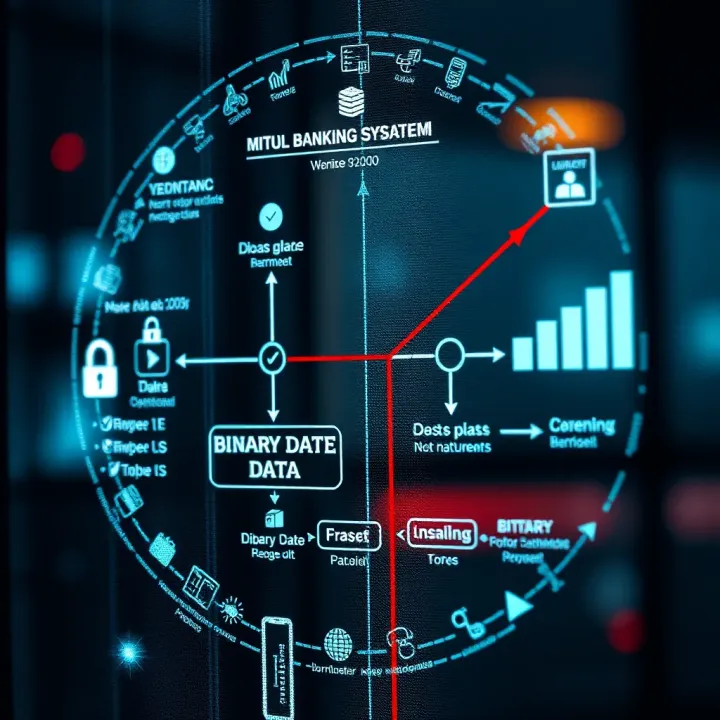
A bit (short for binary digit) is the smallest unit of data in a computer and can exist in one of two states: 0 or 1. These two states physically correspond to electrical states such as on/off or high/low voltage in a circuit.
For traders, recognising that everything—from stock price ticks to complex algorithms—is fundamentally built up from these tiny units is quite powerful. Bits enable precise digital accuracy which is crucial when milliseconds count on the Johannesburg Stock Exchange (JSE).
While single bits carry minimal information, grouping eight bits together forms a byte. A byte can represent 256 distinct values, enough to encode a single character like a letter or number.
In practice, trading software handles data in bytes because it’s easier to manage and interpret larger chunks than single bits. For example, when you enter your security PIN on a banking app, each digit is stored as a byte, ensuring clarity and reducing error.
In summary, binary data’s power lies in its simplicity and universality, forming the foundation of all digital computing — from everyday banking on your mobile to complex trading algorithms running at top speed.
Understanding these basics equips you to appreciate how data flows securely and reliably through South African financial systems.
Understanding how binary data is represented and stored is key to grasping how all digital devices operate, from the laptops you use to trade on the JSE, to the mobile networks keeping South Africa connected. Binary data provides a precise, universal language that machines understand, and knowing its representation and storage sheds light on the efficiency and reliability of modern computing.
The binary number system works on base-2, unlike the decimal system we use daily which is base-10. It uses only two digits: 0 and 1. Each position in a binary number has a value that’s a power of 2, starting from the rightmost digit. For example, in the binary number 1011, the rightmost digit represents 2^0 (1), the next 2^1 (2), then 2^2 (4), and finally 2^3 (8). Adding the values where the digit is 1, you get 8 + 0 + 2 + 1 = 11 in decimal.
This system suits digital electronics perfectly because electrical circuits can easily represent two states: on or off, high voltage or low voltage. This simplicity reduces errors and increases processing speeds, making binary the foundation of computing.
Conversion between binary and decimal is essential in programming and data analysis, allowing programmers and analysts to translate machine-level information into human-readable data. Tools and algorithms in trading software routinely convert numbers back and forth, ensuring the raw binary data translates into meaningful graphs, prices, or alerts.
Binary data finds its home on various storage media, mainly magnetic and solid-state devices. Traditional hard drives store bits magnetically on spinning platters. Tiny magnetic fields are oriented either upwards or downwards, representing 1s and 0s respectively. While magnetic drives remain common for bulk storage due to their cost-effectiveness, they involve mechanical parts prone to wear.
Solid-state drives (SSDs), by contrast, store data on integrated circuits without moving parts. They use flash memory cells that trap electrons to represent binary states. SSDs offer faster access speeds and better resilience against shocks and temperature swings, which suits modern trading floors or financial firms in Johannesburg or Cape Town requiring rapid, reliable data access.
Devices translate this raw binary data into usable information through controllers and processors. When a device reads from storage, it detects the binary patterns and converts them through firmware into formats the operating system or applications understand. For instance, a trading platform rendering market charts relies on this translation to reflect real-time data accurately.
In essence, the journey from electrical signals and magnetic orientations to practical applications in software hinges on the faithful representation and storage of binary data.
Understanding these basics helps financial professionals appreciate the reliability and speed of their digital tools, ensuring confident decisions when using trading platforms, analysis software, or financial databases.
Binary data underpins almost every piece of technology we interact with daily, from the smartphone in your pocket to the laptop you use for work. It’s the digital code that devices read and process to function properly. Understanding its role highlights how our modern infrastructure and services rely on this fundamental data form.
Mobile phones and laptops operate by processing vast amounts of binary data. Every app you open, message you send, or document you save involves ones and zeroes being handled behind the scenes. This includes everything from the touchscreen responding to your touches to the operating system coordinating tasks. Without binary data, these devices couldn’t run software or display information.
South African technology providers like Telkom and MTN have adapted their devices and networks to efficiently handle binary data under local conditions. They have to manage connectivity in areas facing challenges like frequent loadshedding. Devices often come with firmware optimised for these environments, ensuring data processing and storage remain reliable even when power fluctuations occur.
Mobile networks send and receive information in digital signals made up of binary data. When you make a call or use WhatsApp, your voice or messages get converted into binary form. This digital signal transmits across the network, allowing communication to occur swiftly and with clarity. Given South Africa’s mix of urban and rural coverage, efficient binary data transfer is crucial to maintain strong connections.
Internet data transmission works on similar principles, with binary data packets moving through networks to deliver websites, videos, and emails. Technologies like fibre-optic cables and 4G/5G networks handle enormous volumes of binary data daily. Providers such as Rain and Vodacom invest in robust infrastructure to ensure smooth streaming and browsing, even as data consumption climbs in Mzansi.
In short, binary data isn’t just an abstract technical concept; it’s the language devices and networks speak to keep our digital lives ticking.
By grasping how binary data functions in devices and communications, financial analysts and traders can better appreciate the technological backbone influencing market operations and investment tools today.
Understanding binary data is more relevant than ever, especially as digital systems underpin everything from banking to mobile communications. For traders, investors, and analysts, knowing how binary data shapes the backbone of these technologies offers a clearer view of the risks and opportunities in digital and financial sectors.
Encryption fundamentally relies on binary data to safeguard information. When you use internet banking on your mobile or laptop, your details are converted into binary code that's scrambled with complex algorithms, making it unreadable to unauthorised users. This process ensures that sensitive transactions remain secure, especially on South African networks where cyber threats can target poorly protected data.
In practical terms, encryption transforms readable data into a coded format using keys represented in binary. This means breaking the code without the key requires immense computational effort—something infeasible for everyday hackers. For those dealing with sensitive financial data, such as share trading platforms or investment apps, the role of binary encryption directly impacts the security of your assets.
South Africa’s digital landscape faces specific challenges, including intermittent connectivity and cybercrime spikes. Protecting data transmitted across local mobile networks like Vodacom or MTN depends heavily on how binary data moves securely. These networks use protocols that encrypt data packets, stopping interception and manipulation during transmission.
Moreover, security measures often incorporate biometric data stored and verified in binary formats, adding layers of protection relevant to South African contexts. For example, online banking apps may use fingerprint recognition, which is processed and stored as digital binary patterns. Understanding these underlying processes helps traders and investors appreciate the technical safeguards guarding their information.
Programmers interact with binary data daily when writing, debugging, or optimising software. Behind every app, trading platform, or financial tool lies binary instructions executed by hardware. Developers translate user-friendly interfaces into binary machine code that devices understand, ensuring accurate, fast operations.
Knowing how binary data behaves allows programmers to create efficient code essential for tasks such as real-time market analysis, algorithmic trading, and mobile payments. This knowledge enables better debugging and optimisation, ultimately delivering reliable financial applications in South Africa’s competitive landscape.
South African developers must consider local infrastructure and user behaviours, such as data constraints and device types common in the region. Handling binary data efficiently results in lighter, faster apps, which perform well even on limited bandwidth or older devices.
For businesses, especially fintech startups or trading platforms that cater to a broad spectrum of users, this efficiency translates to cost savings and a better user experience. Understanding binary data helps local developers innovate while catering to the unique challenges in South Africa’s digital economy.
Grasping how binary data works isn't just technical nitty-gritty; it gives you an edge in evaluating digital tools, ensures your transactions remain secure, and supports smarter, more efficient software development tailored to South African realities.
Discover how 17-bit binary code works and where it fits in digital systems 🔢. Learn to convert and apply this code with examples relevant to South Africa and beyond 🌍.
🔢 Learn how binary code converters translate data between binary and readable formats. Understand types, uses, and tips for precise digital conversions.

Explore what binary means and how it powers everyday tech 💻. Understand its basics and why this language of machines matters in our digital world 🌍.

🔍 Understand binary charts with this practical guide: learn how they're built, used in tech and data analysis, and get tips for reading binary data clearly and effectively.
Based on 11 reviews