
Forex Trading Guide for South African Beginners
🌍 Explore forex trading in South Africa: learn how it works, weigh the risks, understand brokers, and start trading smart with practical tips and legal insights.
Edited By
Ethan Collins
Forex trading, or foreign exchange trading, involves buying and selling currencies against one another to make a profit. It’s the largest financial market in the world, with daily turnover exceeding $6 trillion. For new traders in South Africa, forex trading offers an accessible way to participate in global markets, but it can also carry significant risks if you jump in without understanding the basics.
The forex market operates 24 hours from Monday to Friday, spanning multiple time zones. This continuous trading is driven by factors like economic data, political events, and market sentiment. For instance, changes in South Africa’s interest rates by the South African Reserve Bank (SARB) can influence the value of the rand (ZAR) compared to other currencies like the US dollar (USD) or euro (EUR).
Starting with forex means getting familiar with currency pairs. Major pairs feature currencies from strong economies — such as EUR/USD or USD/JPY — while minor and exotic pairs might include the rand, like USD/ZAR or EUR/ZAR. Beginners should begin with major pairs because they usually offer better liquidity and tighter spreads, reducing overall trading costs.
To trade forex in South Africa, you’ll need a trading account with a regulated broker. Regulated brokers ensure compliance with local laws such as the Financial Sector Conduct Authority (FSCA) guidelines, helping protect your investments. Popular platforms include MetaTrader 4 and 5, which provide tools for analysis and trade execution.
Risk management is key. Using stop-loss orders to limit potential losses and only risking a small percentage of your trading capital per trade (commonly 1–2%) can safeguard your funds. For example, if you have R10,000 to trade, risking R200 per trade keeps your exposure reasonable.
"Trading forex isn't a sprint but a marathon. Success comes from steady learning, disciplined decision-making, and managing your risks wisely."
Keep realistic expectations. Forex trading isn’t a quick route to wealth; instead, it requires patience combined with study and practice. Using demo accounts before risking real money allows you to build skills without pressure.
In this guide, we’ll break down key concepts, step-by-step setup advice, risk strategies, and South African-specific tips so you’re equipped to make informed choices from the get-go.
Understanding how the forex market operates is key for anyone serious about trading currencies. With daily turnover exceeding US$6 trillion, it’s the largest financial market globally, offering abundant opportunities for profit as well as considerable risks. Being aware of its mechanics helps traders make informed decisions suited to their goals and risk appetite.
Definition of forex trading: Forex trading is the buying and selling of currencies against one another. Instead of owning physical money, you trade one currency for another with the aim of making a profit from changes in exchange rates. For example, if you believe the US dollar (USD) will strengthen against the South African rand (ZAR), you might buy USD/ZAR. This means buying dollars while simultaneously selling rand.
How currencies are traded in pairs: Every forex trade involves currency pairs. One is the base currency, and the other the quote currency. The price you see is how much of the quote currency you need to buy one unit of the base currency. For instance, USD/ZAR at 18 means R18 is required to buy 1 USD. This setup lets traders speculate on whether a currency will strengthen or weaken relative to another, focusing on the profit potential from the difference.
Market hours and major forex centres: Forex trading is available 24 hours a day during weekdays because of overlapping trading sessions across time zones. Major centres include London, New York, Tokyo, and Sydney. For example, trading activity peaks during the London and New York overlap (around 3 pm to 7 pm SAST), offering greater liquidity and tighter spreads. Understanding when markets are most active lets you plan trades more effectively and avoid erratic price swings during quieter times.
Retail traders versus institutions: The market combines huge institutional players—such as banks, hedge funds, and multinational corporations—with retail traders like yourself. Institutions command massive volumes, which influence prices and liquidity. Retail traders typically trade smaller amounts but benefit from the same market access through brokers. Knowing this stratification helps set expectations around how market moves occur and why some price changes are sudden.
The role of brokers and platforms: Brokers act as intermediaries providing access to the forex market. They offer trading platforms where you can view prices, execute orders, and manage your account. Choosing a regulated broker with transparent pricing and reliable execution is essential to protect your capital. Platforms like MetaTrader 4 or proprietary broker apps provide the tools you need to analyse charts, place orders, and adjust your trading strategy.
Central banks and their influence on forex: Central banks, such as the South African Reserve Bank (SARB) or the US Federal Reserve, have significant sway on currency values. They do this through interest rate decisions, foreign exchange interventions, and monetary policy announcements. For instance, a rate hike by SARB can strengthen the rand as it offers higher returns for investors. Staying updated with these moves is crucial since they often trigger sharp market reactions.
Understanding these fundamental aspects of the forex market provides you with a solid base to navigate currency trading more confidently and avoid surprises that new traders often face.
Starting with forex trading can feel like stepping into a busy market stall packed with countless options. That said, choosing the right approach from the outset sets the tone for your trading experience and potential success. This section zeroes in on the nuts and bolts of getting started, focusing on practical steps and key decisions relevant to South African traders.
When picking a broker, regulation and licences are your first checkpoints. Make sure your broker is authorised by reliable bodies like the Financial Sector Conduct Authority (FSCA) in South Africa or recognised international regulators such as the FCA in the UK or ASIC in Australia. Having a regulated broker means you’re protected by strict rules designed to guard your funds and ensure fair trading conditions. Imagine it as knowing that your bakkie is roadworthy before hitting the highway.
Account types and minimum deposits vary between brokers and affect how you start trading. Many brokers offer standard, mini, and micro accounts, letting you trade with amounts as low as R500. Beginners often prefer micro accounts to keep exposure low while learning the ropes. Some brokers might require a bigger initial deposit to access better spreads or additional features, so weigh what you need versus your budget.
Costs like spreads, commissions, and fees hit your bottom line and shape profitability. Spreads are the difference between buy and sell prices; tighter spreads mean cheaper trades but might come with higher commissions elsewhere. Some brokers charge a commission per trade but offer fixed spreads. Look carefully: a broker offering zero commission might have wider spreads, costing you more over time. For example, a broker charging a spread of 2 pips on EUR/USD with no commission might cost more than one charging 0.5 pips plus a small commission.
Registering your account isn’t just an online formality—South African rules oblige brokers to comply with the Regulation of Interception of Communications and Provision of Communication-Related Information Act (RICA). This means you’ll need to verify your ID and proof of address before you can start trading. Though this can slow things down a bit, it’s there to stop fraud and money laundering.
Funding your account conveniently is essential. Most brokers accept local payment methods such as EFT (electronic funds transfer), credit/debit cards, and popular e-wallets like Skrill or Neteller. Check the ease and cost of deposits and withdrawals — EFTs are widely accepted with minimal fees, but some card payments might carry charges or delays. For instance, funding your account by EFT from your South African bank account is usually straightforward, but withdrawals might take a few business days.
Using a demo account makes a real difference. It lets you practise trading without risking real cash, test strategies, and get comfortable with the trading platform. Demo accounts typically simulate live market conditions but come with virtual money. Spend time on demo trading to build confidence before switching to a funded account. It's like driving a car in a quiet parking lot before hitting the busy roads.
Starting your forex journey with careful broker selection, proper account setup, and practicing on demo platforms builds a solid foundation and reduces avoidable mishaps later on.
Choosing the right broker and setting up your account using local terms and conditions aims to make trading more accessible and secure. Remember, forex is not a sprint; the right start prepares you for the long haul ahead.
Grasping the basics of forex trading is essential before putting any real money on the table. These concepts give you a foundation to understand how the market functions and make decisions with confidence. They directly affect how you read charts, interpret quotes, and manage your trades day-to-day.
In forex, currencies are traded in pairs. This means you're always buying one currency and selling another simultaneously. Understanding the types of pairs—major, minor, and exotic—helps you know the dynamics and trading costs involved. Majors, like USD/ZAR or EUR/USD, involve the most traded currencies and usually have tighter spreads, making them popular with beginners. Minors exclude the US dollar but pair strong currencies such as EUR/GBP. Exotics mix a major currency with a less-traded one, such as USD/TRY (Turkish lira), often resulting in wider spreads and higher volatility. For example, trading USD/ZAR during South African working hours may be more accessible and cost-effective compared to an exotic pair that moves less predictably.
The base currency is the first in the pair and is what you are buying or selling relative to the quote currency, which is second. If the pair is USD/ZAR and the price is 18.00, it means one US dollar costs 18 rands. So, if the price rises to 18.20, the dollar has strengthened against the rand. This basic understanding is crucial because your profit or loss depends on changes in these exchange rates.
Every pair has a bid price (the price you can sell at) and an ask price (the price you can buy at). The difference between these two prices is called the spread, which effectively acts as a trading cost. Tighter spreads generally mean lower costs, which is why many traders focus on Major pairs with high liquidity. For instance, if USD/ZAR has a bid of 17.98 and an ask of 18.00, your cost to enter the market is the 2-cent spread. Being aware of spreads helps you plan entries and exits more precisely.
Orders define how and when you enter or exit trades. Market orders execute immediately at the current market price – useful when you want to get into a trade quickly. Limit orders let you set a specific price to buy or sell, only executing when that price is reached. Stop orders trigger a market order once the price hits a certain level, commonly used as a risk control measure. For example, you might place a limit order to buy USD/ZAR at 17.50 if you believe it will bounce from that level.
Stop-loss and take-profit orders help lock in gains and limit losses automatically. A stop-loss order closes your trade if the price moves against you to a predefined level. Conversely, a take-profit order locks in profit when the price reaches your target. Using these orders prevents emotional decision-making—imagine you bought USD/ZAR at 17.80 but want to limit losses if it falls to 17.60 while targeting profit at 18.10. Setting these orders beforehand means you don’t have to watch the market constantly.
Proper use of orders directly impacts your risk management. By setting logical entry and exit points, you control your exposure and avoid unnecessary losses. This discipline is vital for developing a consistent trading approach.
Orders aren't just about when to enter or exit. They shape your whole risk strategy. For example, a trader size position to risk no more than 2% of their account on any single trade, using a stop-loss order to define that risk. Understanding orders allows you to combine your analysis with practical steps that protect your capital while aiming for steady gains. This approach is especially important in volatile markets, such as when political developments affect the rand.
In summary, mastering currency pairs, quotes, and order types equips you to trade forex more effectively. You'll better understand market moves and control your trades in a way that suits your goals and risk tolerance. This foundational knowledge sets you up for further learning and real trading experience in the forex world.
Managing risks and protecting your capital are fundamental for anyone serious about forex trading. Without a clear approach to risk, a single bad trade can wipe out substantial funds. This applies everywhere, but especially for South African traders who may face additional challenges like currency volatility and local economic shifts. Getting a solid risk control foundation helps you trade smarter, not harder.
Setting realistic goals is where every well-managed forex journey starts. Instead of aiming to double your R10,000 account in a week, set achievable targets — like a 2-5% monthly return. Realistic goals keep expectations grounded and prevent reckless risks. For instance, expecting steady gains allows for patience and consistent habits, rather than chasing quick wins that might blow out your account.
Defining your trading strategy and rules means deciding the conditions under which you'll enter and exit trades. This could be based on technical indicators, news events, or a mix of both. Clear rules stop you from making snap decisions when emotions bubble up. Having strict entry and exit points, like always using a stop-loss or avoiding trading during news spikes without confirmation, can lock in discipline. It’s that discipline that separates hopeful gamblers from skilled traders.
Keeping a trading journal is often overlooked but it’s pure gold. Record every trade: why you entered, how it went, and what you learned. Over time, this helps spot patterns in your behaviour and strategy that work or fail. For example, you might notice you lose more when trading late in the evening or after certain economic announcements. Adjusting based on this real data can improve performance a lot.
Position sizing and leverage control are key tools for protecting your funds. South African traders should be especially cautious with leverage. While brokers might offer up to 1:200 or more, using such high leverage can blow your account within minutes. Limiting exposure to 1-2% of your total capital on any one trade reduces the risk of catastrophic losses. For example, on a R10,000 account, risking only R200 per trade means you can withstand several losing trades without panic.
Using stop-loss orders effectively means placing an automatic order to sell if the price falls to a certain level, cutting your losses. Stop losses aren’t just technical; they're psychological safety nets. Without them, it is tempting to let losses run, hoping the market will turn, which often ends badly. For instance, if you buy USD/ZAR at 15.00, set a stop-loss at 14.80 to avoid losing more than R200, depending on the lot size.
Avoiding emotional trading is easier said than done but vital. Fear and greed are forex’s biggest pitfalls. After a losing streak, some traders try to recoup losses quickly, risking big amounts or abandoning their plan. Others may hesitate to close losing positions, hoping for a turnaround. Sticking to your plan—and using a journal to reflect rather than react—can keep emotions from steering your decisions. Remember, it’s the consistent, calm trader who often ends up in black.
Good risk management is not about avoiding losses, but managing them. Losses will happen. Protecting your capital means you’re ready for the next opportunity.
In short, managing risk with a solid plan, clear rules, and techniques like position sizing and stop-loss orders is your best defence against the forex market’s ups and downs. This approach builds resilience and keeps your trading sustainable over time.
Trading forex from South Africa demands an understanding of both the global market and specific local factors. Knowing how South African market dynamics influence currency pairs, particularly the rand (ZAR), helps you make smarter trades. This section offers practical tips tailored for local traders, focusing on issues like economic news impacts, managing trades within local hours, and finding reliable resources.
The South African rand can be quite volatile compared to major global currencies, partly due to its emerging market status. It often reacts sharply to shifts in commodity prices, interest rates, and South Africa's political climate. For example, a drop in gold or platinum prices can weaken the rand, as these minerals form a large part of South Africa’s export earnings. Traders need to keep an eye on such commodity trends when dealing with ZAR pairs.
Besides the rand, regional currencies like the Botswana pula (BWP) or the Nigerian naira (NGN) also offer trading opportunities. However, they tend to be less liquid and more prone to sharp swings, meaning you should approach these pairs with caution and use smaller position sizes.
South Africa’s economic reports—released by institutions such as Stats SA or the South African Reserve Bank (SARB)—have immediate effects on forex markets. Updates on inflation rates, unemployment figures, or GDP growth can prompt quick moves in the rand. Likewise, political events like cabinet reshuffles or policy announcements can create volatility.
For instance, during periods of political uncertainty, the rand often weakens, reflecting trader nerves. Keeping a close watch on local news feeds helps you anticipate such swings. That said, it's wise to avoid opening large positions just before major announcements to limit exposure.
South African traders operate mainly in the SAST time zone (UTC+2), which overlaps with major European market hours. This timing is advantageous because liquidity tends to be higher during these periods, leading to tighter spreads on currency pairs like EUR/ZAR or GBP/ZAR.
However, the Asian and US sessions occur outside typical local work hours, meaning some opportunities might require early mornings or late nights. Setting alerts or using automated trading tools can help you manage these timings effectively without disrupting your daily routine.
Engaging in local forex forums such as the MyBroadband money forum or specialised Facebook groups offers practical benefits. These platforms allow you to exchange experiences, discuss broker reliability, and share insights on trading strategies relevant to South African conditions.
For example, fellow traders might point out updates on broker promotions, experiences with local payment methods, or the impact of recent SARB policy decisions on the rand. Being part of a community also helps you avoid scams, a concern in the local trading space.
The South African Reserve Bank and Statistics South Africa release essential economic indicators. SARB’s quarterly monetary policy reviews help traders gauge interest rate trends, which influence forex valuations, while Stats SA reports on employment, inflation, and economic growth.
Monitoring these official releases keeps you grounded in real-time fundamentals, aiding decisions on pair entries or exits. For instance, an unexpected SARB interest rate hike could strengthen the rand, offering a chance to profit if positioned correctly.
Apps like MT4 and MT5 remain dominant for executing trades globally, but South African traders also benefit from local-specific tools. Many use local bank apps for rapid account funding or platforms like EasyEquities to track market news.
Additionally, news apps showing SARB releases and Stats SA updates, or financial news portals such as Moneyweb, provide fast access to essential information. Combining these with real-time price alert apps enables timely reactions to market movements.
Staying tuned to local market conditions, using trusted sources, and managing trades within South African timeframes are key moves that beginners should prioritise. This foundation allows you to build confidence and trade with a clearer sense of the surrounding environment.
🌍 Explore forex trading in South Africa: learn how it works, weigh the risks, understand brokers, and start trading smart with practical tips and legal insights.
🌍 Learn the essentials of forex trading, from currency pairs to risk management, with practical tips tailored for South African traders. 📈💰
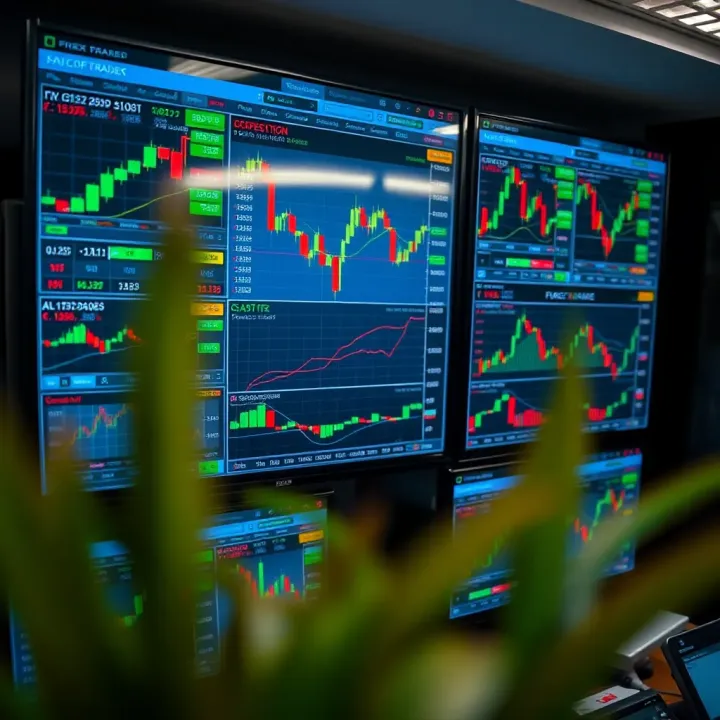
Discover essential forex trading tools for South African traders. From software to risk management, boost your strategies and track markets effectively 📈💻💰
🌍 Learn effective forex trading strategies tailored for South African beginners! Master key concepts, risk management, and planning for confident trading success.
Based on 15 reviews